
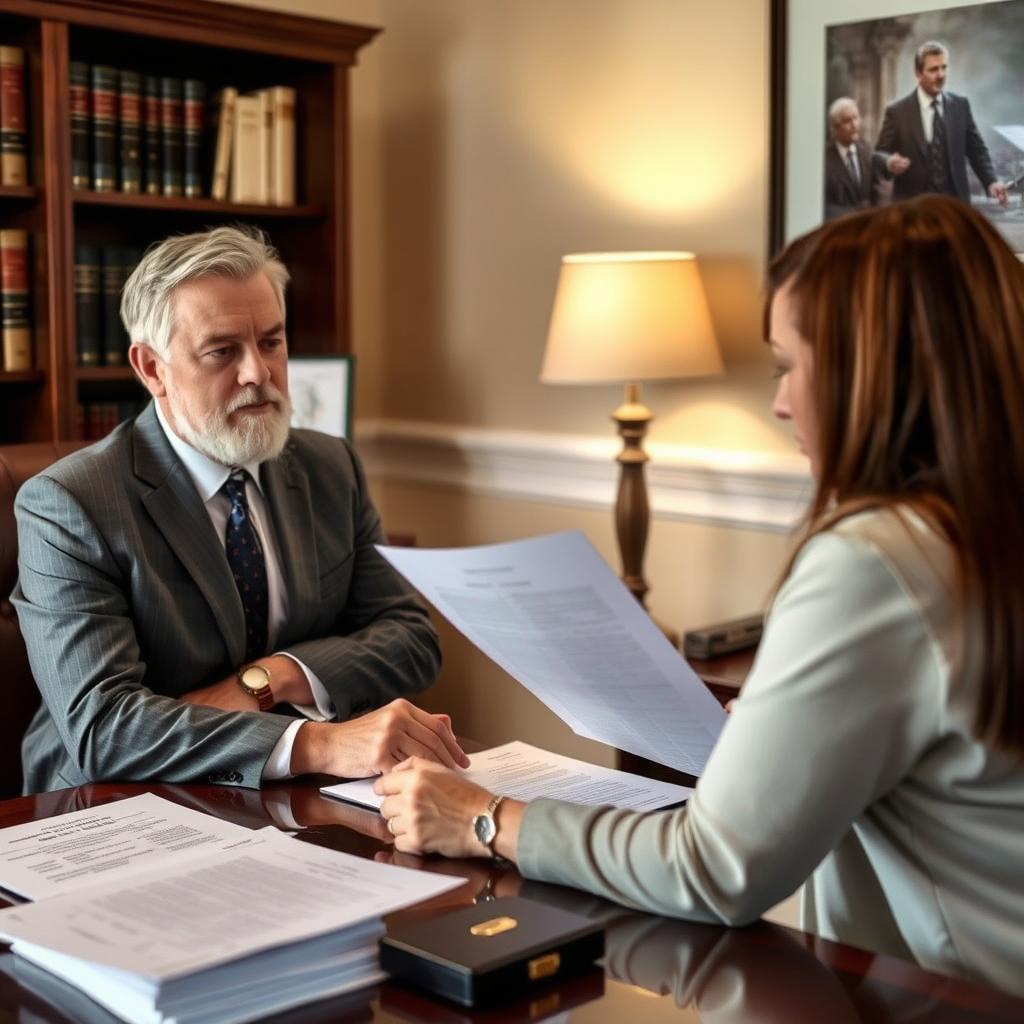
Marital Settlement Agreement Lawyer Caroline County, VA
A marital settlement agreement is often the single most important document in a Virginia divorce—it resolves property division, spousal support, and, where applicable, child-related issues without a trial. In Caroline County, where the Circuit Court at 111 Ennis Street in Bowling Green handles all divorce and equitable distribution matters, a carefully drafted agreement protects your interests and moves your case forward efficiently. Law Offices Of SRIS, P.C. Concentrates in family law and helps clients across Caroline County prepare, negotiate, and finalize marital settlement agreements that comply with Virginia’s equitable distribution statutes, including Va. Code § 20‑107.3 and § 20‑109. Our Fairfax Location serves residents of Bowling Green, Carmel Church, and the surrounding communities along the I‑95 corridor. For help with a marital settlement agreement in Caroline County, reach our firm at (888) 437‑7747. Law Offices Of SRIS, P.C. – Advocacy Without Borders.
What Marital Settlement Agreements Mean in Caroline County, Virginia
Virginia is an equitable distribution state, meaning marital property is divided fairly—though not necessarily equally—under the factors listed in Va. Code § 20‑107.3. A marital settlement agreement, sometimes called a property settlement agreement or separation agreement, lets spouses control that division themselves rather than leaving it to a judge. Once the agreement is signed by both parties and accepted by the Caroline County Circuit Court, it becomes a binding contract that governs property, debts, retirement accounts, business interests, and, when included, spousal support and child-related arrangements.
The Caroline County Circuit Court has jurisdiction over divorce, equitable distribution, and the incorporation of marital settlement agreements into final decrees. Standalone custody, visitation, and child support matters are handled in the Caroline County Juvenile and Domestic Relations District Court, but the complete resolution of all financial issues in a divorce—especially when real estate, a family business, or multiple investment accounts are involved—requires a thorough agreement that meets the statutory requirements. The court reviews the agreement for fairness and for consistency with public policy, but a well‑prepared marital settlement agreement significantly streamlines the process and often allows parties to avoid contested hearings.
Caroline County residents benefit from working with a lawyer who understands how the local courts apply Virginia law to marital settlement agreements. Because the county sits between Fredericksburg and Richmond along I‑95, many families have careers, commutes, and property holdings that span multiple localities. An agreement that accounts for those realities—and for the specific practices of the Caroline County courts—helps prevent future disputes and enforcement actions. Law Offices Of SRIS, P.C. brings extensive experience with Virginia family law to every marital settlement agreement we prepare for Caroline County clients.
How Mr. Sris and His Of Counsel Handle Marital Settlement Agreement Cases
Every marital settlement agreement starts with a thorough understanding of the marital estate. Mr. Sris and his Of Counsel work with clients to identify and classify all assets and debts—marital, separate, and hybrid—under the principles of Virginia law. We help value real estate, retirement accounts, business interests, and personal property, and we evaluate claims for spousal support and any child‑related provisions that the parties wish to include. The goal is a complete, enforceable agreement that reflects the parties’ intentions and complies with the statutory framework.
Negotiation and drafting are central to the process. In many cases, spouses and their attorneys exchange proposals and work toward mutually acceptable terms outside of court. When negotiations stall, Mr. Sris and his Of Counsel draw on decades of litigation experience to advise clients on the likely outcome if the matter were presented to the Caroline County Circuit Court. Because Virginia law requires the agreement to be in writing and signed by both parties, careful drafting is essential. We also review agreements proposed by the other side to identify ambiguous language, omissions, or terms that may be unenforceable under Virginia law. Once the agreement is finalized, we represent clients at the uncontested divorce hearing to present the agreement to the court and obtain the final decree.
About Mr. Sris and His Of Counsel Team
Mr. Sris, Owner and Founder of Law Offices Of SRIS, P.C., founded the firm in 1997 and practices across Virginia, Maryland, the District of Columbia, New Jersey, and New York. He is a former prosecutor—experience that informs his approach to contested family law cases when litigation becomes necessary. Mr. Sris testified before the Virginia House Courts of Justice Committee in support of 2019 HB 635 (chief patron Del. David Bulova), legislation that addressed retirement‑account division in Virginia equitable distribution. Alongside Mr. Sris, the firm’s Of Counsel bring over 120 years of combined legal experience across multiple practice areas. Results may vary. Mr. Sris and his Of Counsel have documented 4,739+ case results since 1997. Together, the team works to guide Caroline County clients through every stage of preparing, negotiating, and finalizing a marital settlement agreement.
Frequently Asked Questions
What is a marital settlement agreement in Virginia?
A marital settlement agreement is a written contract that resolves all financial and property issues between spouses in a divorce, allowing the case to proceed as uncontested. Under Virginia law, it typically addresses the division of marital property and debts, spousal support, and, when relevant, child custody, visitation, and child support. The agreement must be in writing and signed by both parties under Va. Code § 20‑109. Once accepted by the circuit court, it becomes part of the final divorce decree and is enforceable through the court’s contempt powers if either party fails to comply.
Do I need a lawyer for a marital settlement agreement in Caroline County?
Virginia law does not require you to hire a lawyer to draft a marital settlement agreement, but working with an experienced family law attorney helps protect your rights and avoid costly mistakes. An attorney can identify assets you may not have considered—such as retirement accounts, stock options, or business interests—and ensure the agreement complies with the equitable distribution factors in Va. Code § 20‑107.3. In Caroline County, an attorney who is familiar with local court practices can help present the agreement efficiently at the uncontested divorce hearing.
How is a marital settlement agreement enforced in Virginia?
If a party fails to follow the terms of a marital settlement agreement that has been incorporated into a final divorce decree, the other party can seek enforcement through the circuit court. Enforcement remedies may include motions to compel compliance, contempt proceedings, and, in some cases, monetary sanctions. Because a marital settlement agreement is a contract, independent contract claims may also be available outside the divorce case. The court’s approach depends on the specific language of the agreement and whether it was properly executed.
Can a marital settlement agreement be modified after the divorce?
Property division terms in a marital settlement agreement are generally final and cannot be modified after the divorce decree is entered. However, provisions for spousal support or child‑related matters may be modifiable if the agreement allows it or if Virginia law permits modification based on a material change in circumstances. The language of the agreement is critical; a well‑drafted marital settlement agreement will clearly state which sections are modifiable and which are final.
What happens if my spouse refuses to sign a marital settlement agreement?
If your spouse refuses to sign a marital settlement agreement, the divorce proceeds as a contested case and the Caroline County Circuit Court will determine property division, support, and other issues at trial. The court applies the equitable distribution factors under Va. Code § 20‑107.3, which can lead to outcomes neither party anticipated. In that situation, your attorney can still work to negotiate a settlement at any point before the judge issues a ruling, but the leverage and cost considerations shift once litigation begins.
How does equitable distribution affect a marital settlement agreement in Virginia?
Equitable distribution provides the legal framework for dividing marital property, but a marital settlement agreement lets spouses decide the result themselves rather than relying on the court’s application of the statutory factors. Virginia’s factors include the duration of the marriage, each spouse’s contributions, and the circumstances that led to the divorce. An agreement that acknowledges these factors and distributes assets fairly is more likely to be accepted by the Caroline County Circuit Court. Without an agreement, the judge will classify, value, and divide the property based on the evidence presented.
Related family law pages: Family law representation in Fairfax County · Divorce and family law services in Fairfax City · Property division support in Falls Church · Family law guidance in Prince William County · Family law assistance in Manassas
Attorney advertising. Prior results do not guarantee a similar outcome. Results may vary. Attorney responsible for this advertising: Mr. Sris.
Case results depend on a variety of factors unique to each case.