
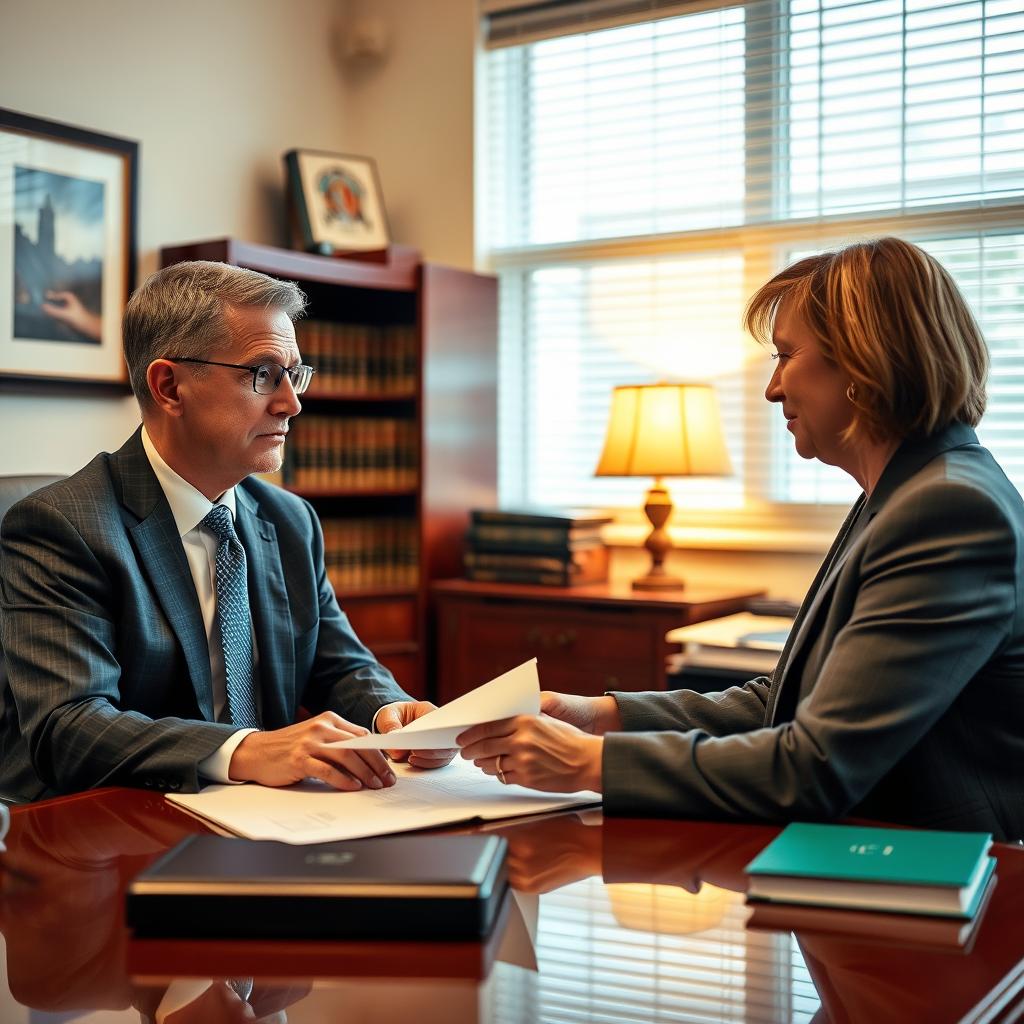
False Claims lawyer Spotsylvania County, VA
Federal false claims charges carry serious consequences, including the possibility of years in prison and the weight of the United States government bringing its resources to bear against a defendant. If you are under investigation or have been charged in connection with a claim for payment made to a federal agency—whether involving government contracts, health‑care reimbursements, or grant funds—you need counsel who knows how these cases unfold in the Eastern District of Virginia. Mr. Sris and his Of Counsel team represent individuals investigated by the FBI, the Department of Health and Human Services Office of Inspector General, or the Department of Justice for alleged violations of the False Claims Act, including the criminal provision at 18 U.S.C. § 287. The firm draws on extensive combined legal experience to advocate at every stage, from grand jury appearances through sentencing in the U.S. District Court for the Eastern District of Virginia. Contact Law Offices Of SRIS, P.C. at (888) 437‑7747 to request a consultation about your situation. Law Offices Of SRIS, P.C. – Advocacy Without Borders.
What Federal False Claims Cases Mean in Spotsylvania County
Although Spotsylvania County is far from the federal courthouses in Alexandria or Richmond, a false claims investigation with ties to Northern Virginia or the Richmond area is often handled by the U.S. Attorney’s Office for the Eastern District of Virginia, a jurisdiction known for its high volume of federal criminal prosecutions. The Alexandria and Richmond divisions hear cases arising out of the I‑95 corridor, including Spotsylvania, because the county sits within the Eastern District. Investigations frequently begin months or years before charges are filed. Federal agents—FBI special agents, IRS Criminal Investigation special agents, HHS‑OIG investigators—may execute search warrants, issue subpoenas for financial records, or seek interviews without initially making an arrest. The sheer length of a federal investigation can be disorienting, and attempting to navigate it without guidance from counsel who understands the U.S. Sentencing Guidelines, the Speedy Trial Act, and the practical rhythms of the Eastern District puts a person at a significant disadvantage.
The criminal provision of the False Claims Act—18 U.S.C. § 287—makes it a felony to present a false, fictitious, or fraudulent claim to the United States. A conviction carries a maximum prison term of up to five years. The related civil provision (31 U.S.C. § 3729) authorizes treble damages and per‑claim civil penalties and often runs parallel to a criminal case, meaning a person named in a civil qui tam lawsuit may also face criminal exposure. Because the Department of Justice directs its Assistant U.S. Attorneys to pursue criminal cases when the facts warrant, a civil investigation can evolve into an indictment with little warning. The firm’s attorneys watch for that shift and work to present the facts and legal arguments that support the client’s position before the charging decision is made.
How Mr. Sris and His Of Counsel Handle Federal False Claims Cases
Federal defense work is not state‑court defense with longer timelines. The case begins with an initial appearance and a detention hearing in front of a magistrate judge in either Alexandria or Richmond. Bond is often contested in federal court; pretrial release is governed by the Bail Reform Act, and the government frequently moves for detention in fraud cases. Mr. Sris and his Of Counsel counsel the client on what to expect, advocate for release, and, if the client is detained, press for expedited discovery and motion practice from the start. A grand jury indictment is required for felony prosecution, and the government’s use of cooperating witnesses, documentary evidence gathered through subpoena, and complex financial analysis demands a thorough review of the discovery. The firm brings in forensic accounting and investigative support as needed to evaluate the numbers the prosecution relies on and to develop alternative characterizations of the evidence. Plea discussions occur under the U.S. Sentencing Guidelines, where acceptance‑of‑responsibility reductions and cooperation under Section 5K1.1 or Rule 35 can materially affect the sentencing range. If the matter does not resolve, the firm prepares for trial in the Eastern District—a forum where jury selection, Rules of Evidence practice, and familiarity with the federal rules of criminal procedure are critical.
Throughout the case, the focus remains on testing every element of the charge: whether the claim was actually false, whether the requisite intent existed, whether the government’s loss calculation withstands scrutiny, and whether the charging decision itself was tainted by investigative overreach or constitutional violations. A federal defense that is built around the specific facts of the alleged false claim, rather than a generic strategy, stands the trusted chance of achieving a favorable outcome. Because federal prosecutors generally have high conviction rates, early and focused advocacy is essential.
About Mr. Sris and the Firm’s Of Counsel Attorneys
Mr. Sris, Owner and Founder of Law Offices Of SRIS, P.C., has practiced since 1997. He is a former prosecutor and is admitted in Virginia, Maryland, the District of Columbia, New Jersey, and New York. His background includes testimony before the Virginia House Courts of Justice Committee in support of 2019 HB 635 (chief patron Del. David Bulova). Mr. Sris and the firm’s Of Counsel attorneys bring extensive combined legal experience to each federal matter. The Of Counsel attorneys who support the firm’s federal‑criminal practice are seasoned litigators who work alongside Mr. Sris; collectively, they have handled cases across the Eastern District of Virginia, the Western District of Virginia, and the federal courts in the four other jurisdictions where the firm appears. That multi‑district experience means the team is comfortable managing the discovery and motion practice that a federal false‑claims case demands.
When a client contacts the firm, the entire file is handled within the firm. Mr. Sris directs the legal strategy, and the Of Counsel attorneys contribute extensive experience in federal sentencing, motion practice, and cross‑examination. Because the firm does not employ junior associates or paralegals, every lawyer working on a matter brings substantial court‑tested judgment to the table. To discuss how the firm might assist with a federal false claims investigation or indictment, reach Law Offices Of SRIS, P.C. at (888) 437‑7747.
Frequently Asked Questions
What is the difference between a federal false claims charge and a state fraud charge?
A federal false claims charge is prosecuted by the U.S. Attorney’s Office in a U.S. District Court and carries a maximum prison sentence of up to five years under 18 U.S.C. § 287. State fraud charges, by contrast, are prosecuted by local Commonwealth’s Attorneys in Virginia circuit courts under state statutes such as Virginia Code § 18.2‑178. There is no parole in the federal system, so a federal sentence is served day‑for‑day, less up to fifty‑four days of good‑time credit per year. Federal sentencing also follows the advisory U.S. Sentencing Guidelines, which incorporate sophisticated loss calculations that can extend the guideline range far beyond what a state court might impose for similar conduct. The differing procedural postures and sentencing regimes make early engagement of counsel especially important in a federal matter.
How does a Virginia lawyer defend against false claims charges in the Eastern District?
Defense counsel challenges the government’s proof of falsity, materiality, and the specific intent to defraud. In a federal false claims case, the government must show beyond a reasonable doubt that the defendant knowingly presented a false or fraudulent claim to a department or agency of the United States. A defense investigation examines the underlying contract or payment scheme, scrutinizes the accounting methods, and identifies factual gaps that may undermine the prosecution’s theory. Procedural motions—to suppress statements or evidence obtained in violation of the Fourth or Fifth Amendment—are also employed. Because the Eastern District’s judges have substantial experience with complex fraud cases, the defense approach is tailored to the pretrial procedures and evidentiary practices in that district.
What should I do if I learn I am under investigation for a federal false claims matter?
Immediately retain counsel and refrain from discussing the facts with anyone other than your lawyer. Do not speak with federal agents without an attorney present. Do not discard documents; preservation of records is essential, both to avoid charges of obstruction and to permit a meaningful review of the government’s evidence. Early involvement of counsel allows for potential advocacy before charges are filed—such as presenting exculpatory evidence to the Assistant U.S. Attorney or exploring a pre‑indictment resolution. The investigative phase is a critical window, and missteps during that phase can be difficult to undo later.
Can a civil False Claims Act case become a criminal case?
Yes, a civil qui tam or government‑filed civil action can lead to a criminal referral if the U.S. Attorney’s Office determines that the evidence supports criminal charges. The Department of Justice has standing policies encouraging parallel proceedings, and it is not uncommon for a civil inquiry to evolve into a grand jury investigation. A defendant named in a civil complaint is entitled to mount a civil defense, but the risk of a criminal indictment means the defense strategy must account for both tracks from the outset.
Does the firm handle False Claims Act cases outside Spotsylvania County?
Yes, Law Offices Of SRIS, P.C. represents clients in federal false claims matters across Virginia, including those venued in the Eastern and Western Districts. The firm’s attorneys appear regularly in the Alexandria and Richmond divisions of the Eastern District, as well as in the Roanoke‑based Western District. The same team that handles a case connected to Spotsylvania County can represent a client whose matter is being prosecuted in Norfolk, Newport News, or Harrisonburg, as federal court jurisdiction extends state‑wide.
How does the False Claims Act sentencing process work in the Eastern District of Virginia?
Sentencing follows the U.S. Sentencing Guidelines, which calculate a recommended range based primarily on the economic loss attributable to the fraudulent claims and the defendant’s role in the scheme. For a conviction under 18 U.S.C. § 287, the base offense level is six, but the loss table under USSG §2B1.1 can elevate the level by as many as thirty points depending on the amount involved. Other adjustments—for abuse of position of trust, sophisticated means, or obstruction—can further increase the range. The district judge in Alexandria or Richmond retains discretion to vary from the guideline range after considering the factors in 18 U.S.C. § 3553(a). The firm prepares a comprehensive sentencing memorandum and, where applicable, marshals character letters, medical records, and employment history to provide the court with a full picture of the defendant’s life and circumstances.
Additional Resources and Related Pages
For representation in neighboring localities, the firm also serves clients from Fairfax County, the City of Fairfax, Falls Church, Prince William County, and Manassas. Visit our pages on federal criminal defense in Fairfax County, federal criminal lawyer in the City of Fairfax, and federal criminal defense in Prince William County to learn how the firm assists clients facing federal charges throughout Northern Virginia.
Official primary sources: U.S. District Court for the Eastern District of Virginia | 18 U.S.C. § 287
Attorney advertising. Prior results do not guarantee a similar outcome. Results may vary. Case results depend on a variety of factors unique to each case. Mr. Sris and his Of Counsel have documented case results across multiple practice areas.