
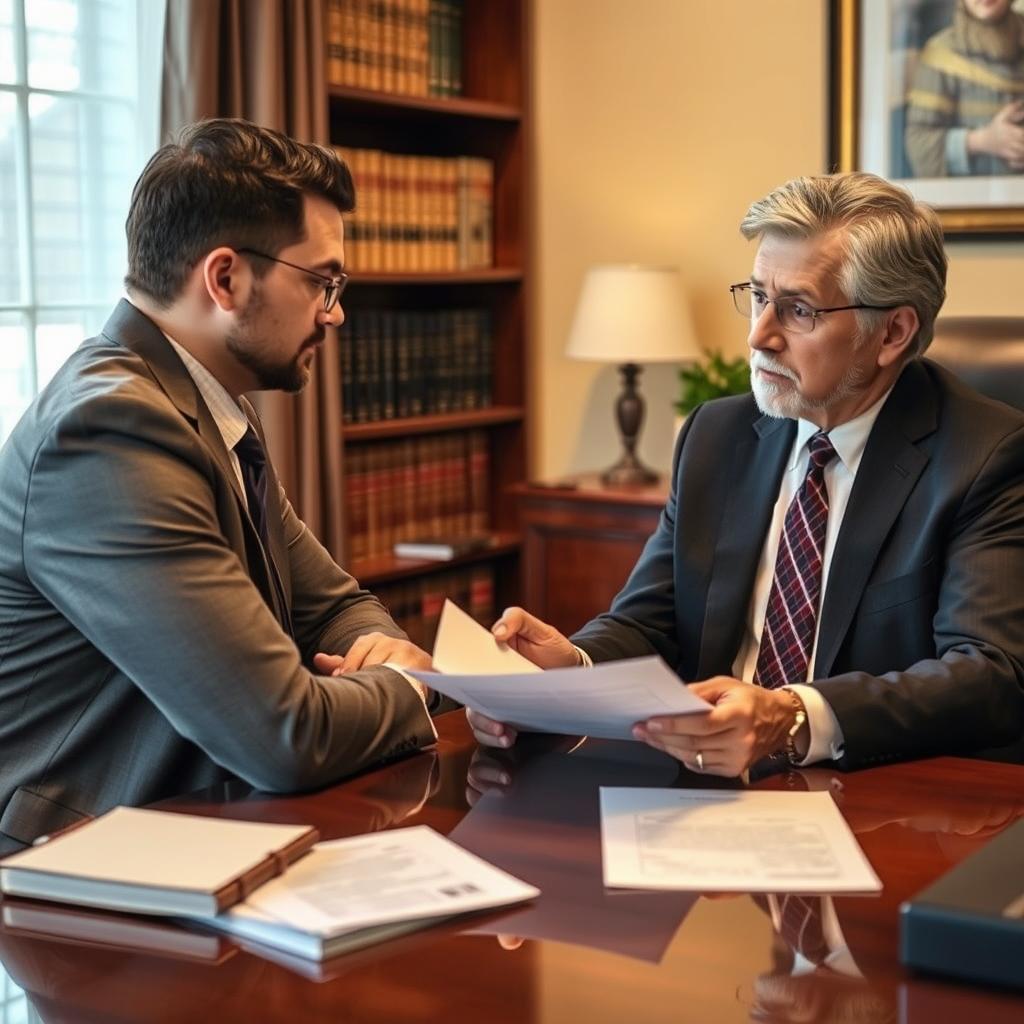
Subornation of Perjury lawyer Fredericksburg, VA
Federal subornation of perjury charges carry severe consequences — in the Eastern District of Virginia, a conviction means substantial prison time under the federal sentencing guidelines, with no parole. When a federal prosecutor alleges that you induced another person to testify falsely in a proceeding before a U.S. Court or grand jury, the government has made the integrity of the proceeding its central concern. Mr. Sris and the firm’s Of Counsel attorneys defend individuals facing subornation-of-perjury investigations, indictments, and trials in Fredericksburg and across Virginia. Because these cases are prosecuted in the U.S. District Court for the Eastern District of Virginia, early engagement with counsel who understands both the substantive statute — 18 U.S.C. § 1622 — and the local federal practice is critical. Law Offices Of SRIS, P.C., founded in 1997, appears regularly in federal court. For a consultation, call (888) 437-7747. Law Offices Of SRIS, P.C. – Advocacy Without Borders.
What Federal Subornation of Perjury Means in Fredericksburg
Subornation of perjury is a distinct federal felony: procuring another person to commit perjury. Under 18 U.S.C. § 1622, the government must prove that the defendant knowingly induced a witness to give material false testimony under oath. The charge often accompanies broader obstruction-of-justice counts under 18 U.S.C. §§ 1503–1520. When an investigation originates in the Fredericksburg area, the case is handled by the U.S. Attorney’s Office for the Eastern District of Virginia — typically through the Alexandria courthouse, with some pretrial proceedings also conducted in the Richmond division.
Fredericksburg residents facing federal process experience the full weight of federal investigative resources. The FBI, DEA, ATF, or IRS-CI may be involved, and federal grand jury proceedings move quickly. The Speedy Trial Act imposes tight timelines, and the government often seeks pretrial detention. Because the federal justice system’s conviction rate exceeds 90 percent, a charge is not an idle threat. The firm’s familiarity with the Alexandria federal docket, including the preferences of the magistrate judges who handle initial appearances and detention hearings, allows us to position a client’s case early — before an indictment may even be returned.
How Mr. Sris and the Firm’s Of Counsel Attorneys Handle Federal Subornation of Perjury Cases
A defense to a subornation-of-perjury charge begins with a careful analysis of the underlying proceedings. We examine whether the allegedly suborned testimony was in fact material to the proceeding, whether the witness’s statement was actually false, and whether the accused had the requisite intent — that is, whether the evidence shows the defendant knowingly and willfully procured perjury. Mistaken belief, ambiguous instructions to the witness, or a good-faith effort to refresh a witness’s memory often distinguishes a criminal act from protected, zealous advocacy.
When the government builds a case on cooperating witnesses or recordings, the firm’s experience in cross-examining government informants and challenging federal electronic surveillance becomes central. Our approach includes filing pretrial motions to suppress evidence obtained in violation of the Fourth Amendment, to dismiss for prosecutorial overreach, or to sever counts that improperly combine multiple allegations. If a conviction cannot be avoided, we focus on the sentencing phase: the U.S. Sentencing Guidelines consider offense-level enhancements for obstruction and perjury, but they also allow departures for acceptance of responsibility and substantial assistance when appropriate.
About Mr. Sris and the Firm’s Of Counsel Attorneys
Mr. Sris, Owner and Founder of Law Offices Of SRIS, P.C., is a former prosecutor. He is admitted in Virginia, Maryland, the District of Columbia, New Jersey, and New York, and has concentrated his practice on criminal defense since 1997. Mr. Sris testified before the Virginia House Courts of Justice Committee in support of 2019 HB 635 (chief patron Del. David Bulova). His understanding of how the government constructs a case informs every stage of federal representation, from grand jury representation through sentencing.
The firm’s Of Counsel attorneys bring substantial federal criminal experience. Mr. Sris and the firm’s Of Counsel attorneys appear in the U.S. District Court for the Eastern District of Virginia and have handled matters under the full spectrum of federal criminal statutes, including perjury, obstruction, and witness-related offenses. The collective skill set covers investigative-stage counseling, motion practice, jury trials, and post-conviction relief — all from the firm’s Fairfax Location, which serves Fredericksburg clients by appointment.
Frequently Asked Questions
What is subornation of perjury under federal law?
Federal subornation of perjury occurs when one person knowingly procures another to commit perjury — that is, to testify falsely under oath in a federal proceeding. The statute, 18 U.S.C. § 1622, prescribes penalties of up to five years of imprisonment and substantial fines. The prosecution must prove three elements beyond a reasonable doubt: (1) that the underlying perjury actually occurred, (2) that the defendant induced or procured the perjured testimony, and (3) that the defendant acted with knowledge and willfulness. Because subornation charges are often added to larger obstruction conspiracies, an attorney who knows the federal rules of evidence and the procedural history of the underlying proceeding can effectively challenge each element.
How does a federal subornation of perjury case proceed in Fredericksburg, VA?
A federal subornation case in Fredericksburg typically begins with a grand jury investigation in the Eastern District of Virginia. If an indictment is returned, the defendant makes an initial appearance and detention hearing in either Alexandria or Richmond. The case moves through arraignment, discovery, motion practice, and trial. Throughout the process, pretrial motions — including motions to suppress statements and to dismiss on multiplicity grounds — can shape the case. The firm’s Federal Criminal practice handles every phase, ensuring a client’s rights are asserted from the earliest investigative contact through any post-conviction appeal or Rule 35 motion for sentence reduction.
What are the potential penalties for subornation of perjury?
A conviction under 18 U.S.C. § 1622 can result in a federal prison sentence of up to five years per count, fines of up to $250,000, and a term of supervised release. However, because subornation charges often accompany obstruction-of-justice counts or false-statement charges under 18 U.S.C. § 1001, the total exposure can be significantly greater. The U.S. Sentencing Guidelines add offense-level enhancements for obstruction, and mandatory minimum sentences can apply if the subornation is connected to certain underlying offenses. There is no parole in the federal system. Mr. Sris and the firm’s Of Counsel attorneys work to challenge the government’s sentencing guidelines calculation and present mitigating factors to the court.
Can I be charged with subornation of perjury if I did not know the statement was false?
No; the government must prove that you acted knowingly and willfully. Federal subornation is a specific-intent crime. If the government cannot establish that you knew the witness’s testimony would be false and that you intended to procure that false testimony, the charge is not supported. Mistaken belief, negligence, or even poor judgment are not enough. A defense attorney can challenge the adequacy of the government’s proof by demonstrating that the witness’s testimony was not clearly false, that the defendant lacked the requisite state of mind, or that the alleged instruction was not a procurement of perjury but a legitimate suggestion about what the witness should recount accurately.
Do I need a lawyer if I am under investigation for subornation of perjury?
Absolutely. Federal investigations move fast, and speaking to an agent without counsel can irreparably harm your defense. Even an innocent explanation can be twisted into a false-statement charge under 18 U.S.C. § 1001. An attorney can contact the investigating agency, assess the scope of the inquiry, and, where appropriate, present exculpatory information before charges are filed. Early representation often leads to declination or a more favorable plea structure. To discuss your situation, reach Law Offices Of SRIS, P.C. at (888) 437-7747.
Related Federal Criminal Defense: Fairfax County Federal Criminal Lawyer | Prince William County Federal Criminal Lawyer | Manassas Federal Criminal Lawyer | Fairfax City Federal Criminal Lawyer
Primary sources: U.S. District Court, Eastern District of Virginia | 18 U.S.C. § 1622 (subornation of perjury) | U.S. Sentencing Commission Guidelines Manual
Attorney advertising. Prior results do not guarantee a similar outcome. Results may vary.
Case results depend on a variety of factors unique to each case.