
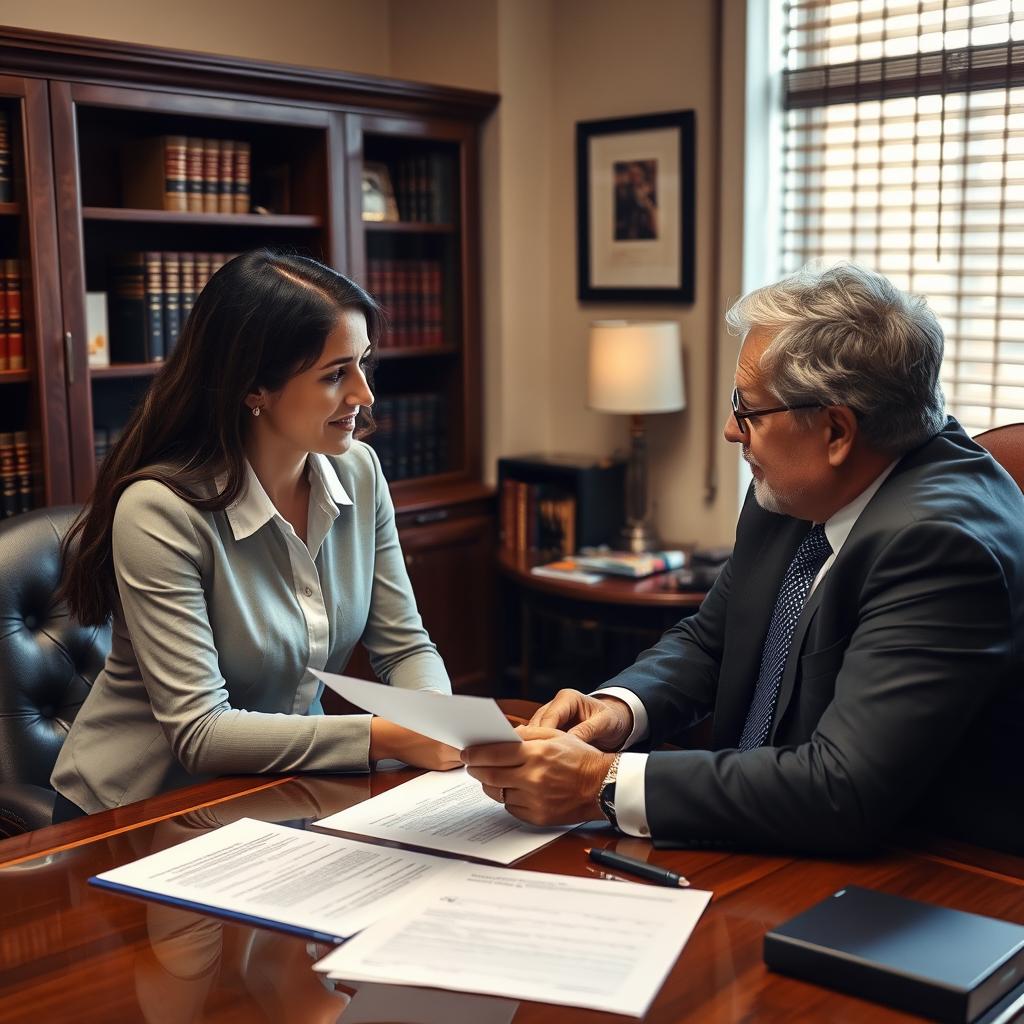
Sex Trafficking of a Minor lawyer Stafford County, VA
Federal sex trafficking of a minor charges carry extreme stakes. When the U.S. Attorney’s Office for the Eastern District of Virginia brings an indictment under 18 U.S.C. § 1591 or related statutes, the accused faces a prosecution arm with vast resources, mandatory minimum prison sentences, and no possibility of parole. For anyone in Stafford County—whether the case arises from an FBI investigation centered in Aquia Harbour, near Quantico, or along the I‑95 corridor—securing experienced federal criminal defense counsel at the earliest stage is critical. Mr. Sris, Owner and Founder of Law Offices Of SRIS, P.C., and the firm’s Of Counsel attorneys represent clients at the U.S. District Court for the Eastern District of Virginia, including the Alexandria Division where most Northern Virginia federal cases are heard. To discuss your situation in confidence, reach Mr. Sris and the firm’s Of Counsel attorneys at (888) 437‑7747. Law Offices Of SRIS, P.C. – Advocacy Without Borders.
What Federal Sex Trafficking of a Minor Means in Stafford County, VA
Federal sex trafficking of a minor differs fundamentally from any state‑level offense. Charges under 18 U.S.C. § 1591—and frequently companion charges under 18 U.S.C. § 2241 et seq.—are prosecuted by the U.S. Attorney’s Office, not the Stafford County Commonwealth’s Attorney. The investigating agency is typically the FBI, often with support from the Department of Homeland Security or the Virginia State Police. From the moment a grand jury returns an indictment, the case moves under the Federal Rules of Criminal Procedure and the United States Sentencing Guidelines, both of which impose procedures and sentencing dynamics unfamiliar to those who have only encountered state court.
Stafford County is part of the Eastern District of Virginia (EDVA), which has long been known for its swift docket and high conviction rates. Cases from Stafford are generally venued in the Alexandria Division of the EDVA, though they may also be assigned to the Richmond or Norfolk Divisions. The federal court process begins with an initial appearance and detention hearing, where the government often argues that the defendant is a flight risk or a danger to the community. Pretrial detention is the norm in serious sex trafficking cases, making the early retention of counsel especially urgent. Because the Speedy Trial Act imposes tight deadlines, defense investigation and motion practice must begin immediately. Mr. Sris and the firm’s Of Counsel attorneys prepare every case for trial from the outset, scrutinizing the search‑warrant affidavits, electronic evidence, and witness statements that form the core of the government’s proof.
The federal sentencing landscape is unforgiving. Conviction under § 1591 carries a mandatory minimum prison term and can result in a sentence of decades in federal custody, followed by supervised release and lifetime sex offender registration. There is no parole in the federal system; the only reduction from a court‑imposed sentence is limited good‑time credit. The firm’s defense strategy therefore focuses on every avenue that can mitigate exposure: challenging the sufficiency of the government’s proof, exposing procedural or constitutional violations, negotiating with the Assistant U.S. Attorney, and, where appropriate, presenting mitigating factors at sentencing. Because the stakes are so high, a defense that merely reacts to the prosecution’s timeline is rarely sufficient. Mr. Sris and the firm’s Of Counsel attorneys work to shape the case, not just respond to it.
How Mr. Sris and the Firm’s Of Counsel Attorneys Handle Federal Sex Trafficking Cases
Federal sex trafficking of a minor cases typically rest on digital evidence—cell‑phone data, social‑media records, text messages, and online‑platform content—as well as cooperating witness testimony. The defense team reviews every piece of discovery for exculpatory material, weaknesses in the chain of custody, and violations of the Fourth Amendment. Motion practice is a central tool: motions to suppress evidence obtained through unconstitutional searches, motions to dismiss based on defects in the indictment, and motions to compel disclosure of Brady material are filed early and supported with thorough legal argument.
Mr. Sris personally directs the strategy for each federal matter, drawing on decades of experience as a former prosecutor and as a defense attorney who has appeared in federal courts in multiple jurisdictions. Law Offices Of SRIS, P.C. is a multi‑state practice, which means the defense team is comfortable navigating the procedural expectations of the EDVA, the U.S. Attorney’s Office, and the federal probation office. The firm’s Of Counsel attorneys bring additional depth, including insight into trial advocacy and forensic evidence, allowing the team to operate at a level that matches the resources the government brings to bear. Every case is prepared for trial, even as the firm explores every reasonable avenue for resolving the matter short of trial.
If trial becomes necessary, the defense centers on holding the government to its burden of proof beyond a reasonable doubt. The elements of sex trafficking of a minor are highly specific, and the government must prove each one. Where the evidence is contestable—for example, where the age of the alleged minor is genuinely in dispute, where the defendant lacked knowledge of the victim’s age, or where the government’s interpretation of online communications is overreaching—the defense is equipped to present counter‑evidence and expert testimony. The firm’s Of Counsel attorneys have extensive trial experience and understand how to cross‑examine federal agents and forensic experts effectively. Throughout the process, the client remains fully informed and participates in every critical decision.
About Mr. Sris and the Firm’s Of Counsel Attorneys
Mr. Sris, Owner and Founder of Law Offices Of SRIS, P.C., is a former prosecutor who has practiced federal criminal defense since 1997. He is admitted in Virginia, Maryland, the District of Columbia, New Jersey, and New York, and appears regularly in the U.S. District Court for the Eastern District of Virginia. Mr. Sris testified before the Virginia House Courts of Justice Committee in support of 2019 HB 635 (chief patron Del. David Bulova). He is supported by the firm’s Of Counsel attorneys, who bring wide‑ranging courtroom experience to every federal case. Together, the defense team has represented clients in the EDVA’s Alexandria and Richmond Divisions, handling matters that range from complex white‑collar prosecutions to the most serious violent and sex‑offense charges.
Mr. Sris and the firm’s Of Counsel attorneys bring extensive combined legal experience to federal sex trafficking defense. Results may vary. The firm’s Fairfax location serves clients from Stafford, Aquia Harbour, Brooke, and the surrounding communities. To request a consultation, call (888) 437‑7747. All communications are confidential.
Frequently Asked Questions
How does a Virginia lawyer defend against sex trafficking of a minor charges?
Defense strategies in federal sex trafficking of a minor cases typically focus on challenging the sufficiency of the government’s evidence, filing motions to suppress illegally obtained material, and raising constitutional defenses. The government must prove beyond a reasonable doubt that the defendant knowingly recruited, enticed, harbored, transported, provided, obtained, or maintained a person under 18, knowing that the person would be caused to engage in a commercial sex act. Where the defendant’s knowledge of the victim’s age is genuinely in dispute, or where the government’s digital evidence is open to multiple interpretations, experienced counsel can build a defense that creates reasonable doubt. The firm also examines the investigative steps for Fourth Amendment violations and scrutinizes any use of cooperating witnesses whose credibility may be challenged. Each case is assessed on its own facts, and the strategy is tailored to the specific allegations.
What should I do if I am facing sex trafficking of a minor charges in Virginia?
If you are under investigation or have been charged, contact an experienced federal criminal defense attorney immediately and do not discuss the case with anyone else. Federal agents frequently attempt to interview suspects before an arrest; you have the right to remain silent and to have counsel present. Invoke that right clearly. Do not attempt to delete social‑media accounts, destroy evidence, or contact any potential witnesses—such actions can lead to additional obstruction charges. Preserve all documents and electronic devices as they are, and let your lawyer handle all communications with the government. At the initial appearance and detention hearing, counsel can present arguments for release, collect information about the government’s case, and lay the foundation for a vigorous defense. Time is of the essence because the federal Speedy Trial Act sets fast‑moving deadlines. Reach Mr. Sris and the firm’s Of Counsel attorneys at (888) 437‑7747 directly.
How long does a federal sex trafficking case take in Virginia?
The timeline of a federal sex trafficking case varies widely, depending on the complexity of the evidence, the number of charges, and the court’s calendar. The Speedy Trial Act requires an indictment within 30 days of arrest and trial within 70 days of indictment, but many delays are excluded by law—for example, time needed for pretrial motions, competency evaluations, or discovery review. A straightforward case may reach trial in six to nine months; a complex, multi‑defendant prosecution can take well over a year. Sentencing, if a conviction occurs, adds additional months. The firm works to move the case efficiently while ensuring that the defense is fully prepared.
Can federal sex trafficking of a minor charges be dropped in Virginia?
Federal charges can be dismissed by the court, but dismissal is rare unless the government’s case is legally defective or key evidence is suppressed. The U.S. Attorney’s Office may agree to drop or reduce charges if the defense demonstrates that the evidence is insufficient, that the indictment was flawed, or that prosecutorial misconduct has occurred. Pretrial motions to dismiss often target jurisdictional defects, failure to state an offense, or violations of the Speedy Trial Act. Where the government’s case is weak, a favorable plea resolution may be possible. The firm will evaluate every legal and factual basis for challenging the charges at the earliest opportunity.
Do I need a lawyer for federal sex trafficking charges in Stafford County?
Yes—given the severity of the penalties, the complexity of federal procedure, and the resources of the U.S. Attorney’s Office, retaining experienced federal criminal defense counsel is essential. Federal sex trafficking of a minor is one of the most actively prosecuted crimes in the Eastern District of Virginia. Without a lawyer, you face an adversarial system that is designed to secure convictions. An attorney can challenge the indictment, file critical motions, negotiate with the prosecutor, and, if necessary, try the case. Because the federal system offers no parole and imposes mandatory minimums, the quality of your defense directly affects the length of any sentence. Law Offices Of SRIS, P.C. provides experienced representation from the investigation through trial and sentencing.
What are the penalties for sex trafficking of a minor under federal law?
Penalties for violating 18 U.S.C. § 1591 include a mandatory minimum prison term, potential life imprisonment, and lifetime sex offender registration. The statute imposes a minimum sentence of 10 years when a minor under 14 is involved, and 15 years when the victim is under 14, with enhanced mandatory minimums if force, fraud, or coercion is used or if the defendant has a prior sex‑offense conviction. Fines can reach $250,000, and the court will order restitution to any victim. Sentencing is governed by the United States Sentencing Guidelines, which provide a detailed point‑based calculation. The firm works with a client to present every available mitigating factor that can reduce the advisory guideline range and to argue for a variance where the circumstances warrant.
Primary Sources:
Attorney advertising. Prior results do not guarantee a similar outcome. Results may vary.
Case results depend on a variety of factors unique to each case.