
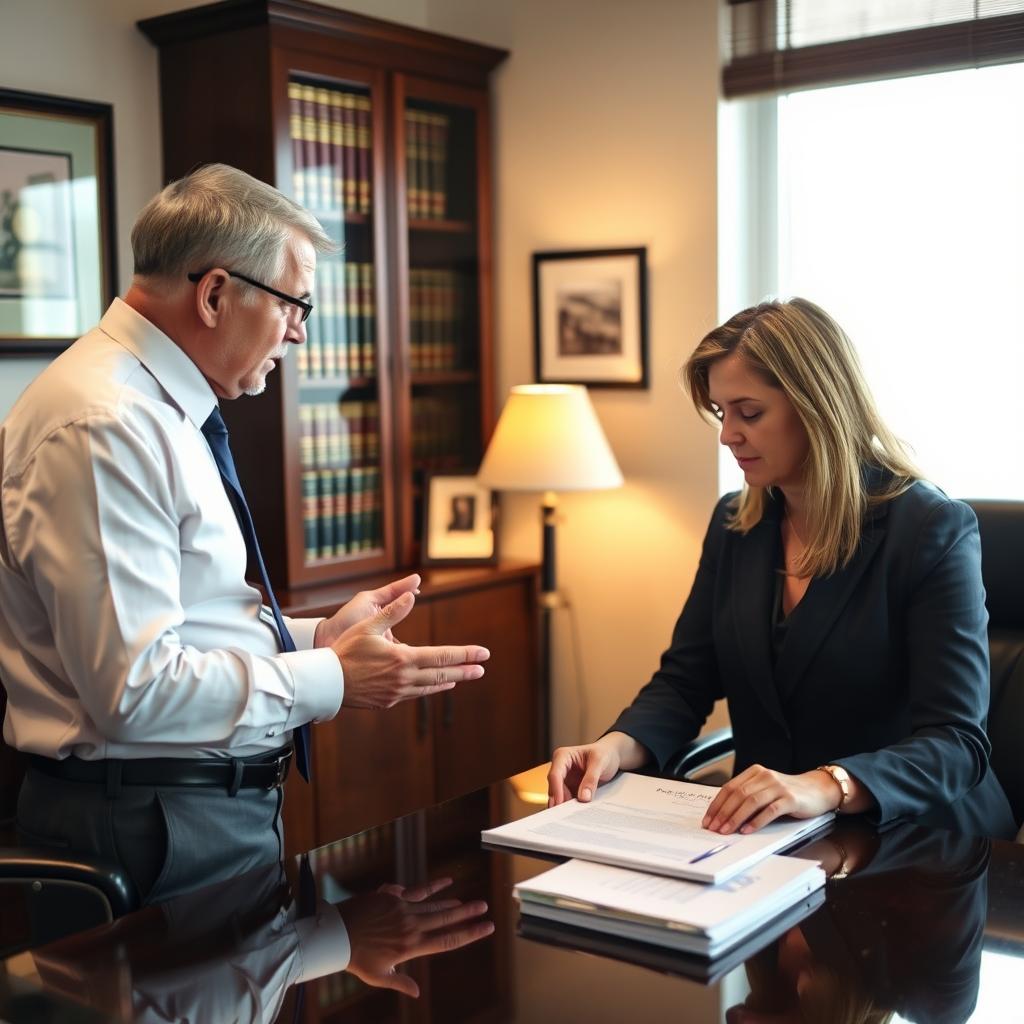
Armed Forces Divorce Lawyer Caroline County, VA
Military families face divorce questions that civilian families rarely encounter. Where will the service member be stationed during the proceedings? How do deployment schedules, BAH (Basic Allowance for Housing), and military retirement accounts affect property division and support? For Caroline County residents who serve or have a spouse serving in the armed forces, these questions carry added weight because Virginia law applies its own statutory framework to every dissolution of marriage — and the answers often depend on the specific facts of each case. Law Offices Of SRIS, P.C., practicing since 1997, represents clients in armed forces divorce matters throughout Caroline County. Reach our location at (888) 437‑7747 to request a consultation. Law Offices Of SRIS, P.C. – Advocacy Without Borders.
What Armed Forces Divorce Means in Caroline County, Virginia
Caroline County sits between Fredericksburg and Richmond along the I‑95 corridor, placing many military families within reach of installations such as Fort A. P. Hill and Naval Support Activity Dahlgren. When a Caroline County couple with one or both spouses in military service decides to divorce, the case typically proceeds in the Caroline County Circuit Court for the divorce, equitable distribution, and spousal support, while the Caroline County Juvenile and Domestic Relations District Court handles standalone custody, visitation, child support, and protective orders. Virginia is an equitable distribution state, not a community property state, so the court divides marital property fairly — not necessarily equally — after considering the factors in Va. Code § 20‑107.3.
Military compensation introduces distinct issues. A service member’s retirement pay, Thrift Savings Plan account, Survivor Benefit Plan, and even future pay increases are all subject to classification as marital or separate property. The federal Uniformed Services Former Spouses’ Protection Act (USFSPA) permits state courts to divide military disposable retired pay, but only after a period of overlap between the marriage and the service member’s creditable service. Local Caroline County counsel understand how to request a court order that meets USFSPA’s requirements so that the Defense Finance and Accounting Service (DFAS) will honor the division. Virginia courts also have the authority to divide military retired pay that has not yet vested, applying the deferred-distribution or immediate-offset method as appropriate under Virginia law.
How Mr. Sris and His Of Counsel Handle Armed Forces Divorce Cases
Mr. Sris and his Of Counsel team work with Caroline County families to identify the assets and benefits that require attention in an armed forces divorce. The process starts with a review of the parties’ financial picture — including the leave and earnings statement (LES), service dates, rank at the time of marriage and separation, and any disability rating that may affect the division of military retired pay under federal law. Because Virginia employs an equitable distribution model, a careful classification of each asset as marital, separate, or hybrid is essential. Mr. Sris and his Of Counsel help clients navigate that classification and the appropriate valuation of pensions, TSP accounts, and other military benefits.
If the parties can agree on the terms of their divorce, a property settlement agreement (separation agreement) can resolve all issues — property division, support, custody, and visitation — without the need for a trial. When the parties cannot agree, Mr. Sris and his Of Counsel present the matter to the Caroline County Circuit Court. This may require forensic accounting opinions on the present value of a pension and testimony regarding the statutory factors under Va. Code § 20‑107.3. Throughout the process, the team remains focused on achieving a resolution that addresses both immediate needs and long-term financial stability. Every matter is handled with an understanding of the unique pressures military life places on families.
About Mr. Sris and His Of Counsel Team
Mr. Sris, Owner and Founder of Law Offices Of SRIS, P.C., has practiced law since 1997 and is admitted in Virginia, Maryland, the District of Columbia, New Jersey, and New York. Mr. Sris testified before the Virginia House Courts of Justice Committee in support of 2019 HB 635 (chief patron Del. David Bulova), which revised Va. Code § 20‑107.3(g). His familiarity with Virginia’s equitable distribution statute gives him a detailed understanding of how property division rules apply in armed forces divorces. Mr. Sris and his Of Counsel bring over 120 years of combined legal experience, and the firm has achieved over 4,739 documented results. Results may vary.
Frequently Asked Questions
How does military deployment affect a divorce in Caroline County?
Military deployment can pause certain divorce deadlines and custody proceedings under the federal Servicemembers Civil Relief Act (SCRA). The SCRA allows a service member to request a stay of court proceedings when deployment materially affects the ability to participate, and Virginia courts in Caroline County must apply those protections. Factors such as the availability of video or telephone participation, whether the deployed parent has established a pending parenting plan, and the length of deployment all influence how the court proceeds. An experienced family law attorney can help a service member or civilian spouse understand how SCRA protections interact with Virginia’s procedural rules and the Caroline County court calendar.
How are military pensions divided under Virginia law?
Virginia courts may divide military disposable retired pay according to equitable distribution principles, using either the deferred distribution or immediate‑offset method. The court first determines the marital fraction — typically the months of creditable service overlapping the marriage divided by total creditable service at retirement. The non‑military spouse’s share is then calculated from the marital portion of the pension. For a pension that has not yet vested, the court may award an offset of other marital assets or enter a deferred distribution order payable upon retirement. Mr. Sris and his Of Counsel are familiar with the documentation required to secure enforcement through DFAS. For guidance on your specific situation, reach Law Offices Of SRIS, P.C. at (888) 437‑7747.
What are the grounds for divorce in Virginia?
Virginia allows both no‑fault and fault‑based divorce grounds. A no‑fault divorce is available after a six‑month separation if there are no minor children of the marriage and the parties have signed a written separation agreement, or after a one‑year separation if there are minor children or no agreement. Fault grounds include adultery (which carries no waiting period), cruelty, willful desertion for one year, and a felony conviction with imprisonment of more than one year. Armed forces divorce cases in Caroline County often proceed on no‑fault grounds after the applicable separation period, although fault grounds remain relevant to spousal support and equitable distribution. To discuss the details of your matter, contact Law Offices Of SRIS, P.C. at (888) 437‑7747.
Do I need a lawyer for an armed forces divorce in Virginia?
You are not legally required to have a lawyer, but armed forces divorces involve overlapping federal and state statutes that can create lasting financial consequences if handled without counsel. Division of military retired pay, the Survivor Benefit Plan, TSP accounts, and VA disability payments are governed by a combination of federal law and Virginia’s equitable distribution rules. A Caroline County family law attorney who understands USFSPA, SCRA, and Va. Code § 20‑107.3 can help protect a service member’s or spouse’s interests. For a consultation, reach Mr. Sris and his Of Counsel at (888) 437‑7747.
How is child custody handled when one parent is in the military?
Custody decisions in Caroline County are based on the best interests of the child under Va. Code § 20‑124.3, but military service can introduce additional considerations. The court evaluates the same ten statutory factors — including each parent’s relationship with the child, the child’s needs, and the role each parent has played — while also addressing deployment schedules, potential relocations, and parenting‑plan flexibility. Virginia law also allows for temporary delegation of visitation to a stepparent or extended family member under certain circumstances during a service member’s absence. In our practice, a detailed parenting plan that accounts for deployment and communication protocols helps both the court and the parents maintain stability for the child. Reach Law Offices Of SRIS, P.C. at (888) 437‑7747 to discuss how we can help develop a plan tailored to your family’s military obligations.
Can an armed forces divorce be handled while one spouse is stationed overseas?
Yes, Virginia courts can proceed with a divorce even when one spouse is stationed overseas, provided the service member receives proper notice and an opportunity to participate. The SCRA may allow a stay if the deployment prevents meaningful participation, but many Caroline County cases move forward using video conferencing, written testimony, and electronic communication. Mr. Sris and his Of Counsel coordinate with overseas service members to ensure all discovery and court appearances occur in a manner consistent with Virginia procedural rules, whether the opposing party is represented or in default. To discuss the logistics of an international deployment and your divorce, call (888) 437‑7747.
Fairfax County family law representation · Prince William County family law lawyer · Stafford County divorce attorney
Additional resources: Virginia Domestic Relations Code (Title 20) · Caroline County Circuit Court · Virginia Judicial System
Attorney advertising. Prior results do not guarantee a similar outcome. Results may vary. This page is for general informational purposes and does not constitute legal advice. Engaging Law Offices Of SRIS, P.C. Requires a signed engagement agreement.
Case results depend on a variety of factors unique to each case.