
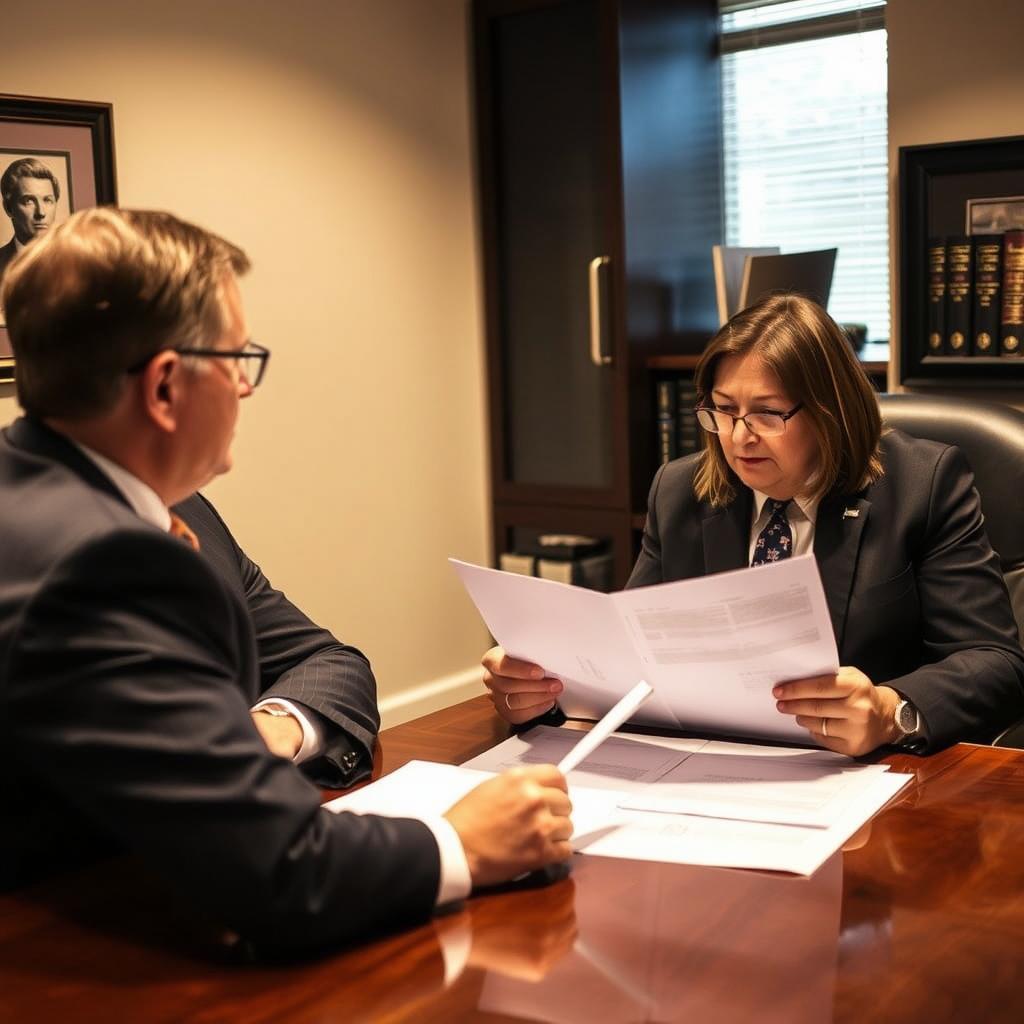
Commercial Leasing Lawyer Fairfax County
You need a Commercial Leasing Lawyer Fairfax County to protect your business interests in complex lease agreements. Law Offices Of SRIS, P.C. —Advocacy Without Borders. provides direct legal counsel for Fairfax County commercial landlords and tenants. We review and negotiate terms to prevent costly disputes over rent, maintenance, and use clauses. Our team handles lease enforcement and litigation in Fairfax County courts. (Confirmed by SRIS, P.C.)
Statutory Definition of Commercial Lease Agreements in Virginia
Virginia law governs commercial leases primarily through contract and property statutes, not a single code. The Virginia Uniform Commercial Code (VUCC) and the Virginia Residential Landlord and Tenant Act (VRLTA) do not apply to most commercial tenancies. Key governing statutes include the Virginia Code sections on contracts, property, and landlord liens. Commercial leases in Fairfax County are binding contracts interpreted by their written terms. Disputes often center on breach of contract, specific performance, or eviction.
Virginia Code § 55.1-1200 et seq. (VRLTA) explicitly excludes commercial leases from its residential protections. Virginia Code § 8.2A-209 covers finance leases of goods, which can be relevant for equipment. The Virginia Code Title 8.01, Civil Remedies and Procedure, governs lawsuits for breach. Virginia Code § 55.1-2810 addresses landlord liens for commercial tenant property. Maximum penalties are determined by the lease terms and awarded damages.
This legal framework places significant weight on the lease document itself. Ambiguities are construed against the drafter under the rule of contra proferentem. Fairfax County courts expect sophisticated parties to understand their contractual obligations. A Commercial Leasing Lawyer Fairfax County is essential to draft clear, enforceable terms.
What specific Virginia codes govern commercial lease defaults?
Default is governed by the lease contract and Virginia property law. Virginia Code § 55.1-1245 provides a summary process for unlawful detainers, applicable to commercial holds. Virginia Code § 8.01-124 covers ejectment actions for recovering possession. The lease itself defines events of default, cure periods, and remedies. Damages for breach are calculated under common law and the lease’s liquidated damages clause.
How does Virginia law treat security deposits for commercial property?
Virginia law does not statutorily regulate commercial security deposits. The VRLTA’s deposit rules in § 55.1-1226 apply only to residential leases. Terms for holding, accounting for, and returning a commercial deposit are purely contractual. A well-drafted lease should specify the deposit amount, allowable deductions, and return timeline. Disputes become breach of contract claims in Fairfax County Circuit Court.
What defines a “fixture” in a commercial lease under Virginia law?
Fixtures are defined by case law and the lease agreement. Virginia common law states an item is a fixture if it is annexed to the property, adapted to its use, and intended to be permanent. The lease should explicitly state which improvements become property of the landlord. Trade fixtures installed by the tenant for business typically remain removable. Disputes over fixture ownership are common in lease termination. Learn more about Virginia legal services.
The Insider Procedural Edge in Fairfax County
Commercial lease disputes are heard in the Fairfax County Circuit Court. The Fairfax County Circuit Court is located at 4110 Chain Bridge Road, Fairfax, VA 22030. This court handles all civil claims exceeding $25,000, including commercial lease litigation and evictions. Procedural rules are strict, and judges expect precise compliance with filing deadlines. Local Rule 1:00 outlines specific motion practice and scheduling requirements for Fairfax.
The filing fee for a civil complaint, like a breach of lease action, is $102. A petition for unlawful detainer (eviction) has a filing fee of $87. The timeline from filing to trial can range from six months to over a year, depending on docket congestion. Discovery disputes are common in complex commercial cases involving property valuations. Mediation through the Fairfax Circuit Court’s program is often ordered before trial.
Procedural specifics for Fairfax County are reviewed during a Consultation by appointment at our Fairfax Location. The court’s business court docket handles complex commercial litigation efficiently. Judges in Fairfax County have extensive experience interpreting dense commercial lease agreements. Having a lawyer familiar with these local rules is a decisive advantage.
What is the typical timeline for a commercial eviction in Fairfax County?
A commercial eviction can take 60 to 90 days from notice to lockout if uncontested. The process starts with a written notice to pay or quit, as defined by the lease. Filing an unlawful detainer warrant initiates the court case. If the tenant contests, the case schedule follows the court’s civil docket. A contested eviction can delay possession for several months.
Where do I file a lawsuit for breach of a commercial lease?
You file at the Fairfax County Circuit Court Civil Division. The court address is 4110 Chain Bridge Road, Fairfax, VA 22030. The claim must be filed in the county where the leased property is located. For damages over $25,000, the Circuit Court has exclusive jurisdiction. The clerk’s Location requires the original lease and complaint. Learn more about criminal defense representation.
Penalties & Defense Strategies for Lease Disputes
The most common penalty is a monetary judgment for unpaid rent and damages. Courts enforce the lease terms, which can include accelerated rent, legal fees, and repair costs. A tenant may lose possession of the property through eviction. A landlord may face claims for constructive eviction or breach of quiet enjoyment. Defenses often hinge on proving the other party failed to perform a contractual duty.
| Offense | Penalty | Notes |
|---|---|---|
| Tenant Default (Non-Payment) | Judgment for back rent, late fees, court costs, attorney’s fees. Possession forfeited. | Lease dictates notice period (often 5 days). Accelerated rent clauses are enforceable. |
| Landlord Failure to Maintain | Tenant may sue for damages, repair and deduct, or claim constructive eviction. | Commercial leases often place maintenance burdens on the tenant (Triple Net). |
| Holdover Tenancy | Landlord can claim double rent under VA Code § 55.1-1254 or higher holdover rate. | Holdover rate is typically 150-200% of original rent as per lease. |
| Breach of Use Clause | Injunction, eviction, and damages for diminished property value. | Use clauses are strictly enforced in zoning-compliant properties. |
[Insider Insight] Fairfax County prosecutors do not handle civil lease disputes. The Fairfax County Attorney’s Location may litigate on behalf of the county as a landlord. In private disputes, local judges scrutinize lease language for clarity and fairness. They are less sympathetic to sophisticated parties who sign poorly drafted agreements. Early negotiation informed by strong legal analysis usually yields a better outcome than trial.
What are the financial risks of breaking a commercial lease early?
You remain liable for all rent due under the lease term. The landlord has a duty to mitigate damages by seeking a new tenant. You are responsible for the difference in rent if a new tenant pays less. You must also pay leasing commissions, renovation costs, and legal fees as per the lease. These costs can amount to tens or hundreds of thousands of dollars.
Can a landlord seize business property for unpaid rent?
Yes, through a landlord’s lien if the lease grants it. Virginia Code § 55.1-2810 allows for a contractual landlord’s lien on tenant property. The lease must explicitly create this security interest. The landlord must follow strict foreclosure procedures to avoid a conversion lawsuit. This is a powerful remedy that requires precise legal action.
Why Hire SRIS, P.C. for Your Fairfax County Commercial Lease
Our lead commercial counsel has negotiated and litigated over 200 commercial lease agreements. SRIS, P.C. attorneys understand the financial stakes in Fairfax County real estate. We draft leases to protect your long-term interests and avoid ambiguous terms. Our litigation team enforces lease provisions in Fairfax County Circuit Court. We provide strategic advice on tenant improvements, assignments, and renewals. Learn more about DUI defense services.
Primary Attorney: The SRIS, P.C. commercial leasing team is led by attorneys with direct experience in Fairfax County property law. Our lawyers have handled cases involving Location complexes, retail spaces, and industrial warehouses in Fairfax. We focus on achieving client objectives through precise contract work or assertive litigation.
SRIS, P.C. has a Location in Fairfax for convenient client meetings. Our approach is direct: we identify your use points and exploit contractual weaknesses. We have secured favorable settlements and judgments for both landlords and tenants. Your case review includes a line-by-line analysis of the lease document. Call us to discuss your specific Fairfax County commercial leasing issue.
Localized FAQs for Fairfax County Commercial Leasing
What should I look for in a Fairfax County commercial lease agreement?
Scrutinize the rent escalation clause, operating expense (CAM) definitions, repair obligations, and use provisions. Ensure the default and remedy sections are clear and not one-sided. The assignment and subletting clause impacts your flexibility. Always have a Commercial Leasing Lawyer Fairfax County review it before signing.
How long does a commercial landlord have to return a security deposit in Virginia?
Virginia law sets no deadline for commercial security deposits. The return timeline is governed solely by the lease agreement. The lease should specify the conditions for deductions and the return period. Disputes are resolved as breach of contract claims in court.
Can a Fairfax County landlord enter my commercial space without notice?
The lease dictates entry rights. Most commercial leases grant the landlord reasonable right of entry for inspection and repair. “Reasonable” often means during business hours with minimal disruption. The lease may require 24-48 hours notice except for emergencies. Without a clause, common law requires reasonable notice. Learn more about our experienced legal team.
What is a “triple net” (NNN) lease common in Fairfax County?
A triple net lease requires the tenant to pay base rent plus all property expenses. These expenses include property taxes, building insurance, and common area maintenance (CAM). It is a standard lease for single-tenant commercial properties in Fairfax. Tenants must budget for these variable costs also to rent.
Who is responsible for repairs in a commercial lease?
Responsibility is allocated by the lease agreement. Often, tenants are responsible for all interior repairs and maintenance. Landlords typically retain responsibility for structural repairs and major system replacements. The lease’s “maintenance and repair” section must be explicit to avoid disputes.
Proximity, CTA & Disclaimer
Our Fairfax Location is strategically positioned to serve clients throughout Fairfax County. We are accessible for meetings to discuss your commercial lease negotiation or dispute. Consultation by appointment. Call 703-636-5417. 24/7.
Law Offices Of SRIS, P.C.
—Advocacy Without Borders.
Fairfax, Virginia
Past results do not predict future outcomes.