
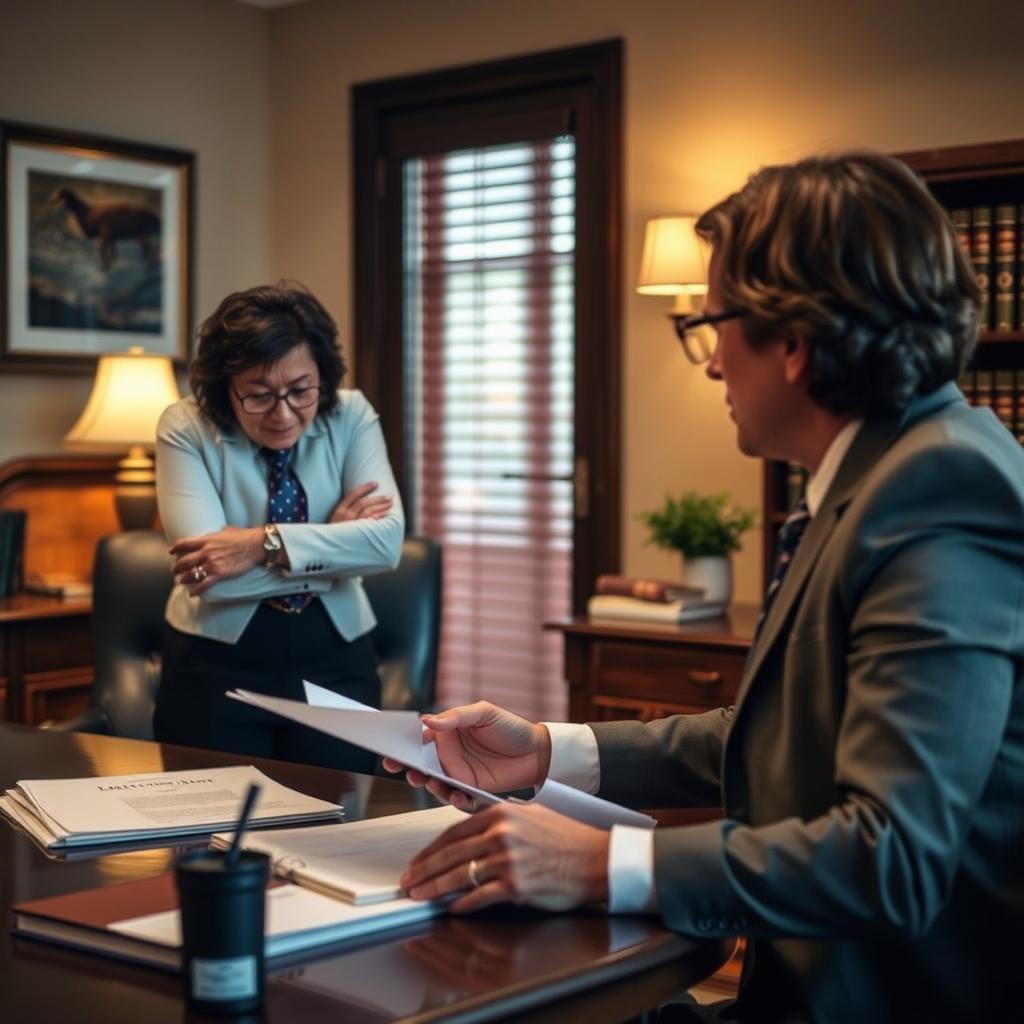
Desertion Divorce Lawyer Orange County, VA
Desertion divorce is a fault-based ground for ending a marriage in Virginia, and it raises complex questions about proof, property division, and the best interests of any children. In Orange County, residents turn to attorneys who understand both the statutory framework under Va. Code § 20-91 and the practical realities of litigating in the Orange County Circuit Court and the Orange County Juvenile and Domestic Relations District Court. Law Offices Of SRIS, P.C. Concentrates its family law practice on helping individuals navigate fault-based divorce proceedings, including those grounded in willful desertion. Mr. Sris, the firm’s Owner and Founder, has practiced in Virginia since 1997 and represents clients in Orange County through the firm’s Fairfax location. From the initial complaint to the final decree, the firm works with clients to present clear evidence of desertion under the statutory standard while protecting their financial and parental rights. Reach Law Offices Of SRIS, P.C. at (888) 437-7747 to request a consultation. Law Offices Of SRIS, P.C. – Advocacy Without Borders.
What Desertion Divorce Means in Orange County, Virginia
Under Virginia law, willful desertion or abandonment for one year is a fault ground for divorce from the bond of matrimony. The operative statute, Va. Code § 20-91, requires the spouse seeking the divorce to prove that the other spouse voluntarily left the marital home without justification and remained absent for a continuous year. A desertion divorce is not automatic; the party asserting the ground must present evidence sufficient for the court to find that the separation was intentional and without the consent of the spouse who stayed. In Orange County, these cases proceed in the Circuit Court because that court has exclusive original jurisdiction over divorce matters under Va. Code § 20-96.
Orange County sits within the Sixteenth Judicial District of Virginia. The Orange County Circuit Court, located at 110 N. Madison Road, Suite 300, Orange, VA 22960, handles all divorce complaints, equitable distribution determinations, and spousal support orders. The Orange County Juvenile and Domestic Relations District Court, also in the same judicial district, handles standalone custody, visitation, child support, and protective order matters. A divorce grounded in desertion will typically involve both courts if the parties have minor children, because while the divorce itself is litigated in circuit court, temporary custody and support issues may first be addressed in the juvenile court. Virginia requires at least one corroborating witness for an uncontested divorce hearing, and a property settlement agreement signed by both parties can resolve all issues without a trial. Mediation is available but not mandatory in Virginia. For residents of Orange or Gordonsville, reaching the courthouse involves major routes such as Route 15, Route 20, and Route 33, and the area’s proximity to landmarks like the James Madison estate underscores the deep community roots many families have in this region.
How Mr. Sris and His Of Counsel Handle Desertion Divorce Cases
Mr. Sris and his Of Counsel approach each fault-based divorce with a focus on building a record that supports the statutory ground while keeping the client’s long-term goals central. In a desertion divorce, the firm gathers evidence such as testimony regarding the date of departure, the lack of consent or justification for the separation, and the continuity of the absence over the required period. Because desertion can affect equitable distribution—Virginia is not a community property state but applies Va. Code § 20-107.3 to divide marital property equitably—the circumstances of the separation may be relevant to the court’s distribution analysis. The firm works with clients to document and present this evidence without unnecessarily escalating conflict when a negotiated settlement remains possible.
The procedural path in Orange County follows the standard Virginia divorce process. The plaintiff files a complaint in the circuit court, serves the defendant, and may request pendente lite relief for temporary support, custody, or use of the marital residence while the divorce is pending. If the desertion ground is contested, the case proceeds through discovery, potential mediation, and ultimately trial. Mr. Sris and his Of Counsel represent clients through each stage, drawing on decades of combined litigation experience to prepare for evidentiary hearings. The team also advises clients on the interaction between a fault ground like desertion and other issues, such as child custody determinations under Va. Code § 20-124.3 or spousal support factors under Va. Code § 20-107.1.
About Mr. Sris and His Of Counsel Team
Mr. Sris, Owner and Founder of Law Offices Of SRIS, P.C., has practiced family law in Virginia for over 28 years. He is a former prosecutor who founded the firm in 1997 and is admitted in Virginia, Maryland, the District of Columbia, New Jersey, and New York. Mr. Sris testified before the Virginia House Courts of Justice Committee in support of 2019 HB 635 (chief patron Del. David Bulova), a bill that revised the equitable distribution statute. His Of Counsel team includes experienced attorneys who concentrate in family law and bring backgrounds that include prior prosecution, law enforcement, and complex litigation. Together, Mr. Sris and his Of Counsel bring over 120 years of combined legal experience and have achieved 4,739+ documented firm-wide results. Results may vary.
Frequently Asked Questions
What is desertion divorce in Virginia?
Desertion divorce in Virginia is a fault-based ground for divorce that requires proof that one spouse willfully left the marital home without justification and remained absent for at least one year. The ground is set out in Va. Code § 20-91. Unlike a no-fault divorce based on separation, a desertion divorce does not require the filing spouse to wait for a separation period after the year of desertion; the one-year period itself is the operative timeframe. However, the court must find that the desertion was intentional and without the consent of the other spouse. The plaintiff bears the burden of proof, and the evidence typically includes testimony about the date of departure, the lack of communication or return, and the absence of any justification for the abandonment. If proven, the court may grant a divorce on this fault ground, and the finding of fault can influence equitable distribution of property and spousal support determinations. Reach Law Offices Of SRIS, P.C. at (888) 437-7747 to discuss your situation.
How is desertion proven in a Virginia divorce case?
Desertion is proven through a combination of direct testimony, documentary evidence, and corroborating witness statements showing the spouse’s intentional departure and continued absence without consent for one year. The plaintiff must demonstrate that the other spouse voluntarily left the marital residence, that the separation was not the result of a mutual agreement or the plaintiff’s own misconduct, and that the spouse did not return or manifest a genuine intention to resume cohabitation. Evidence can include correspondence, financial records showing a change in residence, testimony from family members or neighbors, and the plaintiff’s own narrative of the events. In Orange County, the circuit court hears this evidence at trial if the ground is contested. A corroborating witness is required even in uncontested desertion divorce hearings in Virginia. The specific facts of each case determine the strength of the evidence, so an experienced attorney evaluates the available proof before filing.
Can a desertion finding affect property division or support?
Yes, a finding of desertion can influence equitable distribution and spousal support because the court may consider fault as one of the statutory factors. Virginia is an equitable distribution state, meaning the court divides marital property fairly but not necessarily equally, guided by the factors in Va. Code § 20-107.3. One of those factors is the circumstances and factors that contributed to the dissolution of the marriage, which can include fault such as desertion. Similarly, under Va. Code § 20-107.1, the court considers fault when determining spousal support if the fault caused the breakup of the family. However, fault is only one of many factors, and its impact depends on the totality of the evidence. A spouse found to have deserted the marriage may face a less favorable distribution or be barred from receiving support, but the outcome varies by case. For guidance on your specific situation, reach Law Offices Of SRIS, P.C. at (888) 437-7747.
What courts handle desertion divorce in Orange County?
The Orange County Circuit Court has exclusive jurisdiction over the divorce itself, while the Orange County Juvenile and Domestic Relations District Court may handle related custody, visitation, and support issues. The circuit court, located at 110 N. Madison Road, Suite 300, Orange, VA 22960, hears the complaint for divorce, equitable distribution, and spousal support. If the parties have minor children and a temporary custody or support order is needed while the divorce is pending, the juvenile court may issue pendente lite orders. Final custody, visitation, and child support determinations are also made in the circuit court as part of the divorce decree. Understanding which court addresses which issue is important for presenting evidence properly. Virginia law requires at least one corroborating witness for an uncontested divorce hearing, and mediation is available in Orange County but not mandatory.
Do I need a lawyer for a desertion divorce in Orange County?
You are not legally required to have a lawyer, but navigating a fault-based divorce alone is challenging because of the evidentiary burden and the potential impact on property and custody rights. A desertion divorce requires proving the statutory ground, which often involves preparing a witness list, gathering documents, and presenting testimony in circuit court. The procedural rules also require filing a complaint, serving the defendant, and meeting court deadlines. Mistakes can delay the case or lead to an unfavorable outcome. An experienced family law attorney can assess the strength of the evidence, advise on strategy, negotiate a settlement when feasible, and represent you at trial. Mr. Sris and his Of Counsel concentrate in Virginia family law and represent clients in Orange County. To discuss the details of your matter, contact Law Offices Of SRIS, P.C. at (888) 437-7747.
Explore related resources:
- Family Law Lawyer Fairfax County, VA
- Family Law Lawyer Fairfax City, VA
- Family Law Lawyer Falls Church, VA
- Family Law Lawyer Prince William County, VA
Primary sources for Virginia divorce law:
Willful desertion or abandonment for one year is a fault ground for divorce under Va. Code § 20-91.
Source: Va. Code § 20-91. Virginia Code § 20-91
Reviewed by Mr. Sris, admitted in VA/MD/DC/NJ/NY.
Attorney advertising. Prior results do not guarantee a similar outcome. Results may vary.
Case results depend on a variety of factors unique to each case.