
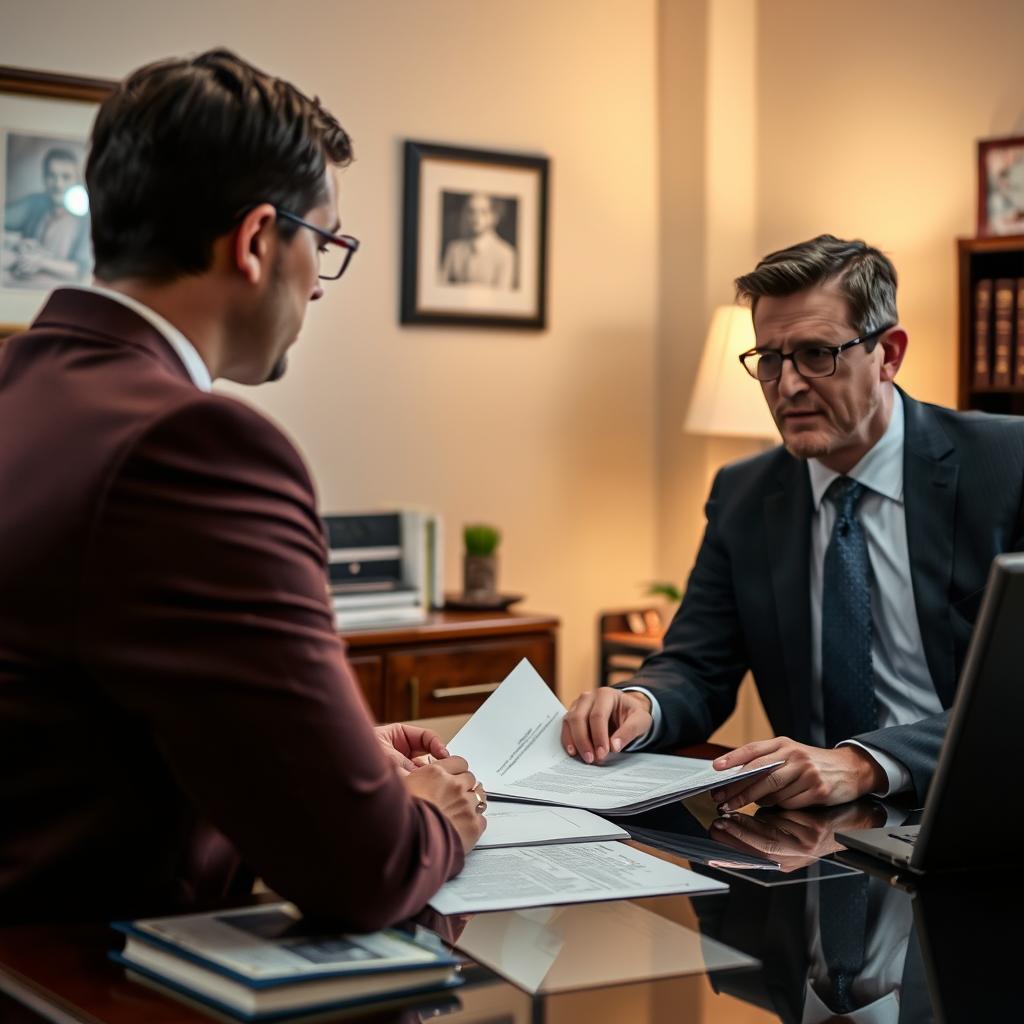
False Statements to a Federal Agent lawyer Fredericksburg, VA
Federal false‑statement charges under 18 U.S.C. § 1001 are prosecuted actively in the Eastern District of Virginia. If you are under investigation or have been contacted by a federal agent in Fredericksburg—whether by the FBI, DEA, IRS‑CI, or another agency—a misstatement in an interview, on a federal form, or in any matter within federal jurisdiction can lead to a felony indictment. The U.S. Attorney’s Office for the Eastern District of Virginia handles cases arising in Fredericksburg, often through its Richmond or Alexandria divisions. Federal conviction rates are high, and there is no parole in the federal system. Early involvement of experienced defense counsel can materially affect the direction of a case. Mr. Sris and the firm’s Of Counsel attorneys bring extensive combined legal experience to federal criminal defense in Fredericksburg. To discuss your situation, reach Law Offices Of SRIS, P.C. at (888) 437‑7747.
What False Statements to a Federal Agent Means in Fredericksburg, VA
Fredericksburg sits within the Eastern District of Virginia, a jurisdiction known for its active federal docket and the “rocket docket” reputation of the Alexandria Division. While the courthouse for the Fredericksburg area is the U.S. District Court for the Eastern District of Virginia, with divisions in Alexandria, Richmond, Norfolk, and Newport News, most federal felony filings involving Fredericksburg defendants are heard in Richmond or, in fast‑tracked cases, Alexandria. The statute most frequently charged for false statements—18 U.S.C. § 1001—makes it a felony to knowingly and willfully make a materially false, fictitious, or fraudulent statement or representation in any matter within the jurisdiction of the executive, legislative, or judicial branch of the United States. A statement need not be under oath; it can be a verbal answer during a federal agent’s interview, a signed administrative form, or a written declaration submitted to a federal agency.
Because Fredericksburg is a growing region along the I‑95 corridor with a significant federal workforce presence, residents may encounter federal investigators in many contexts—government contracting inquiries, tax examinations, border‑related stops, or agency compliance audits. The U.S. Attorney’s Office regularly charges § 1001 alongside other federal counts. The maximum penalty is five years in prison per count, and conviction carries the collateral consequences of a federal felony record. The firm’s Fairfax Location serves Fredericksburg clients, and Mr. Sris and the firm’s Of Counsel attorneys appear in the Eastern District regularly. They understand the dynamics of federal pretrial detention hearings, grand jury proceedings, and the U.S. Sentencing Guidelines that govern sentencing.
How Mr. Sris and His Of Counsel Handle Federal Cases
Federal false‑statement cases require a defense strategy that accounts for the government’s investigative resources and the procedural strictures of federal court. Mr. Sris and the firm’s Of Counsel attorneys get involved as early as possible—ideally before an indictment is returned—to assess the government’s evidence, identify any constitutional or procedural violations, and engage with the Assistant U.S. Attorney to explore declination or a pre‑indictment resolution. When a charge is filed, the team moves quickly to prepare for the initial appearance, detention hearing, and arraignment. Federal pretrial detention standards are demanding; counsel must be ready to argue for release on conditions.
Discovery in federal cases is governed by the Federal Rules of Criminal Procedure, including the government’s obligations under Brady v. Maryland and the Jencks Act. Mr. Sris and the firm’s Of Counsel attorneys scrutinize the investigative file for statements that are literally true, ambiguous, immaterial, or outside federal jurisdiction. Materiality is often a contested element: the prosecution must prove the statement could have influenced the federal agency’s decision‑making. The defense prepares motions to suppress, demurrers, and, if appropriate, motions for a Franks hearing. Throughout, the firm’s approach is to present a prepared, thorough defense that holds the government to its burden while protecting the client’s due‑process rights at every stage.
About Mr. Sris and His Of Counsel Team
Mr. Sris, Owner and Founder of Law Offices Of SRIS, P.C., is a former prosecutor who founded the firm in 1997. His experience on the other side of the courtroom gives him insight into how federal investigations are built and where their weaknesses lie. Mr. Sris is admitted in Virginia, Maryland, the District of Columbia, New Jersey, and New York. He testified before the Virginia House Courts of Justice Committee in support of 2019 HB 635 (chief patron Del. David Bulova).
The firm’s Of Counsel attorneys bring extensive combined legal experience to federal criminal matters. The team includes lawyers with extensive experience in the Eastern District of Virginia, the U.S. Sentencing Guidelines, and the procedural rules unique to federal practice. Together, Mr. Sris and his Of Counsel approach every false‑statement case with a detailed, fact‑focused defense. For a consultation, reach Law Offices Of SRIS, P.C. at (888) 437‑7747.
Frequently Asked Questions
What is the difference between state and federal charges for someone in Fredericksburg?
Federal charges are prosecuted by the U.S. Attorney’s Office in the Eastern District of Virginia and generally carry harsher penalties than state offenses, with no possibility of parole. State charges are handled in Virginia’s General District or Circuit Courts, where local prosecutors have more discretion and probation is often available. Federal false‑statement charges under 18 U.S.C. § 1001 are felonies with a maximum prison sentence of five years per count. The federal system uses the U.S. Sentencing Guidelines, while Virginia state offenses follow the Virginia Criminal Sentencing Commission guidelines. A federal conviction also triggers additional collateral consequences not present in most state cases.
What is federal criminal court and how is it different in Virginia?
Federal criminal cases in Virginia are prosecuted by U.S. Attorneys in U.S. District Court using federal procedural rules and the U.S. Sentencing Guidelines, and they carry no parole. Unlike Virginia’s state courts—where General District Courts handle misdemeanors and preliminary hearings, and Circuit Courts handle felonies—federal cases start with an initial appearance before a U.S. Magistrate Judge. Grand jury indictments are required for all federal felonies. The Eastern District of Virginia is known for its swift case processing, especially in the Alexandria Division. Law Offices Of SRIS, P.C. handles federal defense matters; call (888) 437‑7747 for a consultation.
How do federal sentencing guidelines work in Fredericksburg, Virginia?
Federal sentencing in the Eastern District of Virginia follows the U.S. Sentencing Guidelines, a points‑based system that calculates a guideline range using the offense level and the defendant’s criminal history category. The guidelines are advisory after United States v. Booker, but they strongly influence the judge’s sentence. For false‑statement charges, the base offense level is often increased if the statement involved a terrorism investigation, national security, or a high dollar loss. Acceptance of responsibility and substantial assistance to the government can reduce the range. Mandatory minimums do not typically apply to straight § 1001 charges unless other counts are involved. Law Offices Of SRIS, P.C. can explain how the guidelines may apply in a specific case; call (888) 437‑7747.
How does a Virginia lawyer defend against false statements to a federal agent charges?
Defense strategies for false‑statement charges under 18 U.S.C. § 1001 often focus on materiality, literal truth, ambiguity, and the government’s ability to prove the statement was knowingly false. An experienced federal defense attorney will challenge the evidence by examining whether the statement was actually false, whether it was made concerning a matter within federal jurisdiction, and whether the defendant acted with the requisite intent. Procedural defenses—such as violation of the right to counsel during a custodial interview—may also apply. In some cases, negotiating with the prosecutor before indictment can lead to a declination or a lesser charge. Mr. Sris and the firm’s Of Counsel attorneys evaluate the specific facts under 18 U.S.C. § 1001 to build the strong $1.
What should I do if I am facing false statements to a federal agent charges in Virginia?
If you are facing false‑statement charges under 18 U.S.C. § 1001 in Virginia, contact a federal criminal defense attorney immediately and do not discuss the case with anyone else. Preserve all relevant documents, emails, and other records. Early legal intervention can be critical: a lawyer can communicate with the U.S. Attorney’s Office, seek pretrial release, and begin developing a defense strategy before the grand jury returns an indictment. Delaying representation may limit your options. Law Offices Of SRIS, P.C. can be reached at (888) 437‑7747 for a consultation about your specific situation.
Attorney advertising. Prior results do not guarantee a similar outcome.
Results may vary.
Case results depend on a variety of factors unique to each case.