
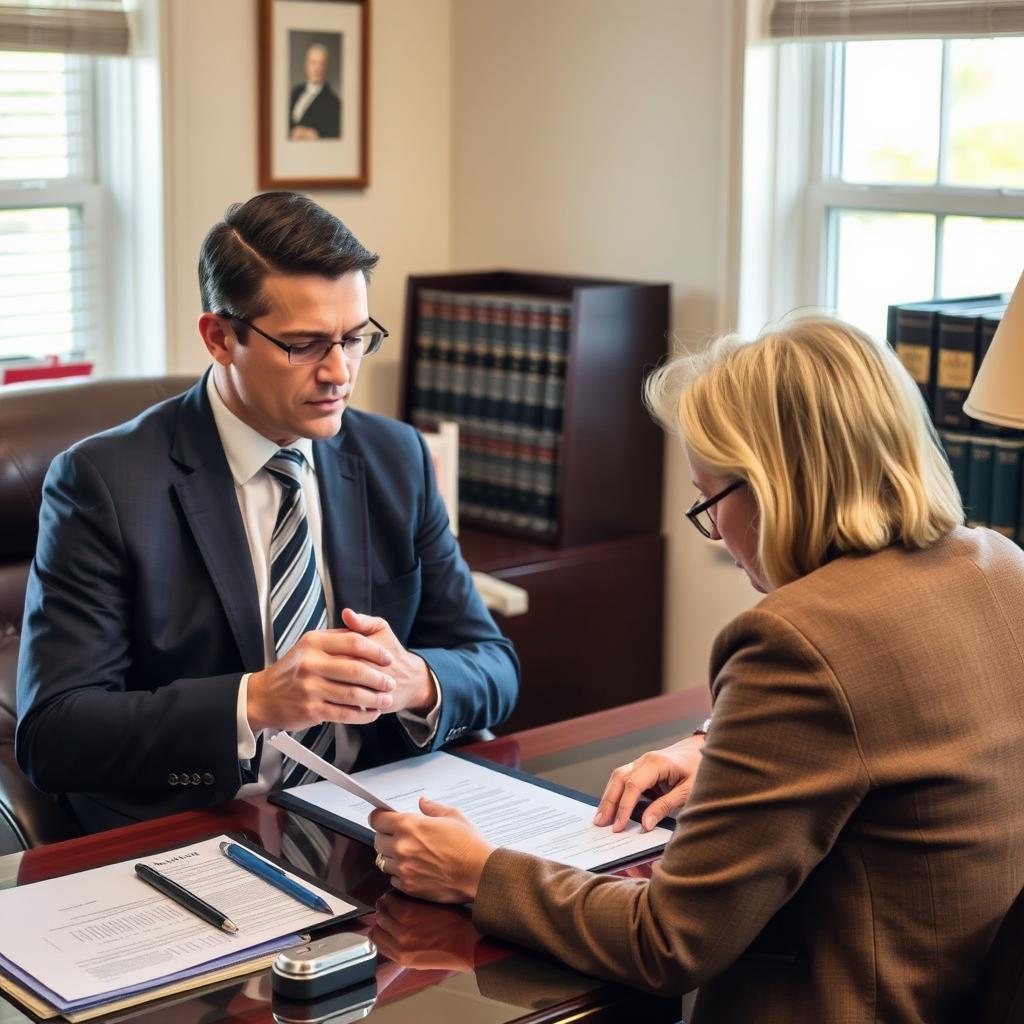
Military Divorce Lawyer Caroline County, VA
Military families stationed at Fort A.P. Hill and throughout Caroline County, Virginia, face distinct considerations when a marriage ends. A military divorce involves the same legal grounds as a civilian divorce under Virginia law, but the Servicemembers Civil Relief Act (SCRA) and specific rules for dividing military retirement pay add layers that require careful navigation. At Law Offices Of SRIS, P.C., Mr. Sris and his Of Counsel represent service members and their spouses in divorce proceedings before the Caroline County Circuit Court at 111 Ennis Street, Bowling Green, VA 22427. Call (888) 437-7747 to request a consultation. Law Offices Of SRIS, P.C. – Advocacy Without Borders.
What Military Divorce Means in Caroline County
Caroline County is located along the I‑95 corridor in Virginia’s 15th Judicial District, with the Caroline County Circuit Court holding exclusive original jurisdiction over divorce actions under Va. Code § 20‑96. Many residents are connected to Fort A.P. Hill, a major Army training installation whose population of active‑duty personnel, reservists, and their families creates a steady need for counsel familiar with the intersection of military service and family law. Because Virginia requires at least six months of domiciliary residency before a divorce suit may be maintained (Va. Code § 20‑97), military members who are stationed here but claim domicile elsewhere must address jurisdictional questions early in the proceeding.
The presence of a federal enclave also means that questions of service of process, child custody when a parent deploys, and the division of military benefits governed by the Uniformed Services Former Spouses’ Protection Act arise regularly in local cases. Mr. Sris and his Of Counsel appear regularly before the Circuit Court on all family‑law matters, including contested and uncontested military divorces, equitable distribution of marital property, spousal support, and custody determinations. Their understanding of how Virginia’s statutory framework—particularly Va. Code § 20‑107.3 on equitable distribution—interacts with federal military-pay statutes helps clients avoid procedural pitfalls that can delay a final decree.
How Mr. Sris and His Of Counsel Handle Military Divorce Cases
Every military divorce involves not only the emotional and financial issues present in any family‑law matter, but also a set of procedural protections and entitlements unique to service members. Mr. Sris and his Of Counsel begin by confirming that proper jurisdiction exists under the SCRA and Virginia’s residency requirements, and they assess whether a stay of proceedings may be requested by a service member whose military duties materially affect the ability to participate. They then work with clients to identify all marital assets, including military retired pay, Thrift Savings Plan accounts, and survivor benefit plan interests, so that the equitable distribution can be calculated in accordance with Virginia’s statutory factors.
When custody or visitation is at issue, the team helps parents construct parenting plans that account for deployment schedules, Permanent Change of Station moves, and the demands of military life, always guided by the trusted‑interests‑of‑the‑child standard set out in Va. Code § 20‑124.3. Throughout the proceeding, Mr. Sris and his Of Counsel manage discovery, negotiate settlement when possible, and appear for hearings and trials. Their combined experience with complex military‑divorce cases allows them to anticipate logistical challenges—such as serving process on a deployed service member or arranging for telephonic testimony—and address them before they slow the case.
About Mr. Sris and His Of Counsel Team
Mr. Sris, Owner and Founder of Law Offices Of SRIS, P.C., has practiced law since 1997 and is admitted in Virginia, Maryland, the District of Columbia, New Jersey, and New York. He testified before the Virginia House Courts of Justice Committee in support of 2019 HB 635 (chief patron Del. David Bulova), the legislation that revised the equitable‑distribution provisions of Va. Code § 20‑107.3. Mr. Sris and his Of Counsel bring over 120 years of combined legal experience and have achieved 4,739+ documented firm-wide results. Results may vary.
Every other attorney working on the firm’s family‑law matters serves in an Of Counsel capacity, allowing the team to draw on a broad range of courtroom backgrounds—including former prosecutorial and law‑enforcement experience—without the limits of a traditional associate structure. The team’s familiarity with the Caroline County courts ensures that each case is prepared with an understanding of local practice and judicial expectations.
Frequently Asked Questions
How does a military divorce differ from a civilian divorce in Virginia?
A military divorce follows the same Virginia divorce statutes as a civilian divorce—including the grounds listed in Va. Code § 20‑91 and the equitable‑distribution rules of § 20‑107.3—but adds specific federal protections and entitlements. The Servicemembers Civil Relief Act may allow a service member to request a stay of proceedings if military duties prevent meaningful participation, and the Uniformed Services Former Spouses’ Protection Act governs how military retired pay may be divided by a state court. Child custody and visitation plans must also account for deployment and relocation. An attorney experienced in both Virginia family law and military‑specific provisions can help ensure these issues are properly addressed from the outset.
What is the Servicemembers Civil Relief Act and how does it affect a divorce case?
The Servicemembers Civil Relief Act (SCRA) is a federal law that provides certain protections to active‑duty service members involved in civil litigation, including divorce proceedings. Among other things, the SCRA allows a service member to request a stay—a temporary pause—of the case when military duties materially affect the ability to appear or respond. The court must consider the request carefully, but the stay is not automatic. The SCRA also imposes requirements for service of process and default judgment. Mr. Sris and his Of Counsel regularly handle SCRA issues and work to ensure that proceedings move forward fairly while respecting a service member’s obligations.
Can a service member file for divorce in Virginia if they are stationed at Fort A.P. Hill but claim domicile in another state?
Yes, if the service member or their spouse has been a bona fide resident and domiciliary of Virginia for at least six months before filing, the Virginia court may exercise jurisdiction over the divorce. Military pay records, driver’s licenses, voter registration, and tax filings are all examined to determine domicile. Even when one party claims domicile elsewhere, Virginia courts may still have jurisdiction over matters such as support or custody if the parties or children are present in the state. Because the jurisdictional analysis can be complex, consulting an attorney early is advisable to confirm the proper forum.
How is military retirement pay divided in a Virginia divorce?
Military retired pay is classified as marital property to the extent it was earned during the marriage, and Virginia’s equitable‑distribution statute (Va. Code § 20‑107.3) governs how it may be divided. The Uniformed Services Former Spouses’ Protection Act permits a state court to treat disposable retired pay as divisible property, but it does not mandate a 50‑50 split; the court weighs the statutory factors—including the length of the marriage overlapping with military service—to reach a fair division. Specialized orders, such as a Military Retired Pay Division Order, are often necessary to implement the award. Mr. Sris and his Of Counsel assist clients in valuing and dividing military benefits correctly.
What happens to child custody when a military parent is deployed?
Virginia courts decide custody based on the best interests of the child, and a parent’s military deployment cannot be the sole factor in modifying an existing custody or visitation order. Under Virginia law, a deployment‑related relocation is treated differently from a voluntary move, and courts often order temporary custody arrangements that preserve the deployed parent’s relationship. A well‑drafted parenting plan can specify how communication will be maintained during deployment and provide a clear process for reinstating the parent’s time upon return. Mr. Sris and his Of Counsel help military families craft plans that remain workable under the demands of service.
What are the grounds for divorce for a military couple in Virginia?
Military couples use the same statutory grounds available to any Virginia resident under Va. Code § 20‑91. No‑fault divorce is available after one year of separation, or after six months of separation if the couple has no minor children and signs a separation agreement. Fault‑based grounds—including adultery, cruelty, willful desertion for one year, and felony conviction with imprisonment of more than one year—remain available but are less common. The SCRA does not alter these grounds, though it may affect the procedural timeline. An evaluation of the specific circumstances will determine which ground is most appropriate.
How long does a military divorce take in Caroline County?
The timeline for a military divorce in Caroline County depends on several variables, including whether the case is contested, whether the SCRA stays any portion of the proceedings, and the court’s calendar. An uncontested divorce where both parties have resolved all issues and the required separation period has elapsed can proceed efficiently once filed. Contested matters involving custody, support, or complex property division take longer because they require discovery, motions practice, and possibly trial. Mr. Sris and his Of Counsel work to move cases forward as promptly as possible while protecting each client’s rights.
Why should I hire a lawyer for a military divorce in Caroline County?
While Virginia law does not require you to hire an attorney for a divorce, the interplay of state family‑law statutes, federal military‑pay regulations, and jurisdictional issues makes military divorce one of the more legally intricate types of family‑law cases. A lawyer who understands both the local court system in Caroline County and the protections and pitfalls unique to service members can help you avoid errors that could affect your financial future, parental rights, or military benefits. Mr. Sris and his Of Counsel offer experienced guidance throughout the process. To discuss your situation, call (888) 437‑7747.
Virginia family law resources: Virginia Code Title 20 (Domestic Relations) · Servicemembers Civil Relief Act (50 U.S.C. Ch. 50) · Caroline County Circuit Court
Attorney advertising. Prior results do not guarantee a similar outcome. Results may vary.
Case results depend on a variety of factors unique to each case.