
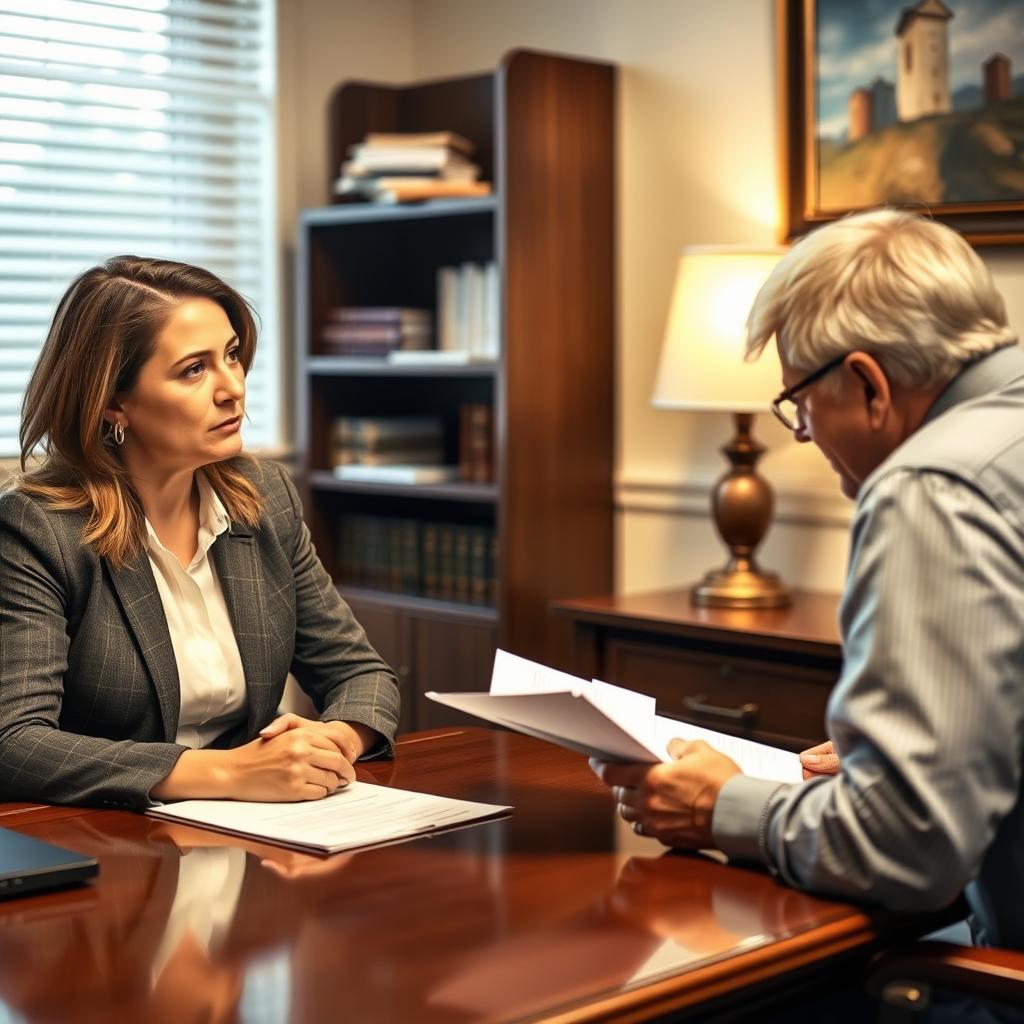
Post Divorce Modification Lawyer Fredericksburg, VA
When a divorce decree no longer reflects the financial or personal circumstances of either party—or the needs of the children—post-divorce modification may become necessary. In Fredericksburg, Virginia, these matters are heard in two courts: the Fredericksburg Circuit Court handles modifications involving spousal support and equitable distribution, while the Fredericksburg Juvenile and Domestic Relations District Court addresses custody and child support changes. Virginia’s equitable distribution framework, grounded in Va. Code § 20‑107.3, and the statutory best‑interest factors for custody create a structured but fact‑sensitive environment for modification requests. Whether you are seeking to alter support obligations, adjust custody arrangements, or enforce an existing order, experienced legal counsel can help you present a clear case to the court. Mr. Sris and his Of Counsel team represent clients throughout the Fredericksburg area from the firm’s Fairfax location. Reach Law Offices Of SRIS, P.C. at (888) 437‑7747 to request a consultation. Law Offices Of SRIS, P.C. – Advocacy Without Borders.
What Post Divorce Modification Means in Fredericksburg
Post‑divorce modification is the legal process of changing the terms of a final divorce decree—typically with respect to spousal support, child support, or custody—after the court has entered a final order. Virginia law permits such changes when a party can show a material change in circumstances that warrants adjustment. For example, a substantial change in either party’s income, the loss of a job, a change in a child’s needs, or a parent’s relocation may support a modification request. The Fredericksburg Circuit Court, located at 701 Princess Anne St, Suite 200, Fredericksburg, VA 22401, has jurisdiction over all equitable distribution and spousal support matters arising from a divorce, while the Fredericksburg Juvenile and Domestic Relations District Court hears standalone custody and child support cases. The Honorable Hugh S. Campbell presides over the Fredericksburg General District Court, and regular business hours are Monday through Friday, 8:00 a.m. To 4:00 p.m. Practitioners appearing in family matters in Fredericksburg should be familiar with the Fifteenth Judicial District’s local procedures and the discretion the court exercises in applying the statutory factors to each unique family situation. Virginia is an equitable distribution state, which means that marital property is divided fairly but not necessarily equally—a principle that can also affect how post‑divorce financial adjustments are evaluated when the original division is in dispute.
Because modification proceedings are fact‑intensive, the Fredericksburg courts will examine evidence of the claimed change in circumstances, the parties’ current financial affidavits, and any relevant testimony. Both an initial petition and written responses require careful preparation. Many modification cases in the Fredericksburg Circuit Court and J&DR Court can be resolved through negotiation or mediation when both sides are willing to work toward an updated agreement that serves the family’s best interests.
How Mr. Sris and His Of Counsel Handle Post Divorce Modification Cases
Mr. Sris and his Of Counsel approach each modification case by first understanding the specific goals of the client—whether that is lowering a support obligation, increasing support to meet a child’s needs, or adjusting a custody schedule. The team reviews the existing court order, the factual basis for the requested change, and the legal standard that must be met under Virginia law. They work with clients to gather the necessary documentation—income statements, tax returns, medical records, school records, and other evidence—that will demonstrate the material change in circumstances. Many modification disputes can be resolved without a full trial. Mr. Sris and his Of Counsel attempt to negotiate an agreed modification that both parties can support, which often saves time and reduces the emotional and financial toll on the family. When an agreement is not possible, the attorneys prepare the case for a contested hearing in the appropriate Fredericksburg court, presenting evidence and examining witnesses to advocate for the client’s position under the applicable statutory factors. Throughout the process, they advise clients on the realistic range of outcomes and the procedural steps required, from filing the initial motion to attending any pendente lite hearings for temporary relief.
The team’s multi‑state experience gives them perspective on how Virginia’s modification laws compare with other jurisdictions, but every case is handled with close attention to local Fredericksburg court practice and the requirements of the Virginia Code. Mr. Sris and his Of Counsel concentrate on family law matters and have handled a variety of post‑divorce modification scenarios, including changes to spousal support under Va. Code § 20‑107.1, child support adjustments under the Virginia child support guidelines, and custody modifications evaluated under the trusted‑interest factors of Va. Code § 20‑124.3. They also represent clients in enforcement actions when a former spouse is not complying with an existing order.
About Mr. Sris and His Of Counsel Team
Mr. Sris, Owner and Founder of Law Offices Of SRIS, P.C., is a former prosecutor who has practiced family law since the firm’s founding in 1997. He testified before the Virginia House Courts of Justice Committee in support of 2019 HB 635 (chief patron Del. David Bulova), the legislation that revised Virginia’s equitable distribution statute. Mr. Sris is admitted to practice in Virginia, Maryland, the District of Columbia, New Jersey, and New York, and he brings a detail‑oriented approach to every post‑divorce modification matter. He works alongside a team of experienced Of Counsel attorneys who concentrate on family law in Virginia. Together, they offer clients a thorough understanding of the procedural and substantive aspects of modification litigation in Fredericksburg courts. The Of Counsel team includes professionals with backgrounds that complement the family law practice, ensuring that each case benefits from a broad base of legal experience. The firm serves clients throughout the Fredericksburg area from its Fairfax location, with telephone consultations available at (888) 437‑7747.
Frequently Asked Questions
What is post‑divorce modification in Virginia?
Post‑divorce modification is a court proceeding that changes the terms of a final divorce decree after the original order was entered. In Virginia, a party may seek to modify spousal support, child support, or custody by filing a motion in the court that issued the original decree—typically the Fredericksburg Circuit Court for support matters or the Juvenile and Domestic Relations District Court for custody. The requesting party must show a material change in circumstances since the last order. The court examines evidence of the change and applies statutory factors to decide whether the modification is in the best interests of the family. While agreements between the parties can streamline the process, the court must approve any agreed modification to ensure it is fair and in a child’s best interests when custody is involved.
When can I modify spousal support after a Virginia divorce?
A court may modify spousal support when the party seeking the change demonstrates a material change in circumstances that was not anticipated at the time of the original award. Common grounds include a significant increase or decrease in either party’s income, retirement, involuntary job loss, or a change in the recipient’s financial need. Virginia law, including Va. Code § 20‑109, governs the procedure, and the court will consider the same factors that guide an initial spousal support determination—length of the marriage, the parties’ earning capacities, and contributions to the family well‑being, among others. The Fredericksburg Circuit Court has the authority to increase, decrease, or terminate spousal support. A party seeking a modification should prepare current financial statements and evidence of the changed circumstances.
How does child support modification work in Fredericksburg?
Child support in Virginia can be modified when there is a material change in circumstances, such as a change in either parent’s income, a change in custody arrangement, or a change in the child’s needs. A parent files a motion in the Fredericksburg Juvenile and Domestic Relations District Court—or in the Circuit Court if the divorce case is still open—and the court applies the Virginia child support guidelines (Va. Code § 20‑108.1). The court recalculates support based on the combined gross income of both parents and the number of children, then apportions the obligation between the parents according to their respective incomes. The court may deviate from the guidelines if applying them would be unjust. Both sides are typically required to submit updated income information and a child support guidelines worksheet.
Do I need a lawyer to modify a custody order in Fredericksburg?
You are not legally required to hire a lawyer to modify a custody order, but the complex procedural and substantive rules make experienced legal counsel highly advisable. Custody modifications in Fredericksburg are decided under the “best interests of the child” standard in Va. Code § 20‑124.3, which lists ten factors the court must consider. A parent who seeks to modify custody must show that there has been a material change in circumstances since the last order and that the proposed change serves the child’s best interests. Presenting this evidence effectively—through testimony, documentary evidence, and sometimes a guardian ad litem—can be challenging without a thorough understanding of local court practice. Mr. Sris and his Of Counsel can help you assess the strength of your case and present it professionally.
How long does a post‑divorce modification case take in Fredericksburg?
The timeline for a modification case in Fredericksburg varies widely depending on whether the matter is contested and the court’s docket. When both parties agree to the modification and submit a signed consent order, the matter may be resolved in a matter of weeks. Contested cases, however, can take several months or longer, especially if discovery is needed or expert evaluations are involved. The court will schedule hearings according to its calendar, and any pendente lite motions for temporary support or custody will add steps. A knowledgeable attorney can help manage expectations and move the case forward efficiently, but every situation depends on its specific facts.
Can I modify a property division after the divorce is final?
Modifying a final property division is generally not permitted under Virginia law unless there is fraud, mistake, or a specific provision in the separation agreement allowing it. The equitable distribution order becomes final once the Circuit Court enters the divorce decree. While spousal support and child‑related orders can be modified upon a showing of changed circumstances, property division is not routinely revisable. If a spouse fails to comply with the property division—for example, refusing to transfer an asset or pay a monetary award—enforcement proceedings, not modification, are the appropriate remedy. Mr. Sris and his Of Counsel can advise you on whether your situation qualifies for any post‑judgment relief and will represent you in enforcement actions in the Fredericksburg Circuit Court if necessary.
For guidance on your specific situation, reach Law Offices Of SRIS, P.C. at (888) 437‑7747. To discuss the details of your matter, contact our firm at (888) 437‑7747.
Related Family Law Pages
Explore our family law representation in other Virginia localities:
Family Law Lawyer in Fairfax County |
Family Law Lawyer in Fairfax City |
Family Law Lawyer in Falls Church |
Family Law Lawyer in Prince William County |
Family Law Lawyer in Manassas
Virginia Primary Sources:
Virginia Code Title 20 (Domestic Relations)
Fredericksburg Circuit Court
Virginia Judicial System
Attorney advertising. Prior results do not guarantee a similar outcome.
Case results depend on a variety of factors unique to each case.