
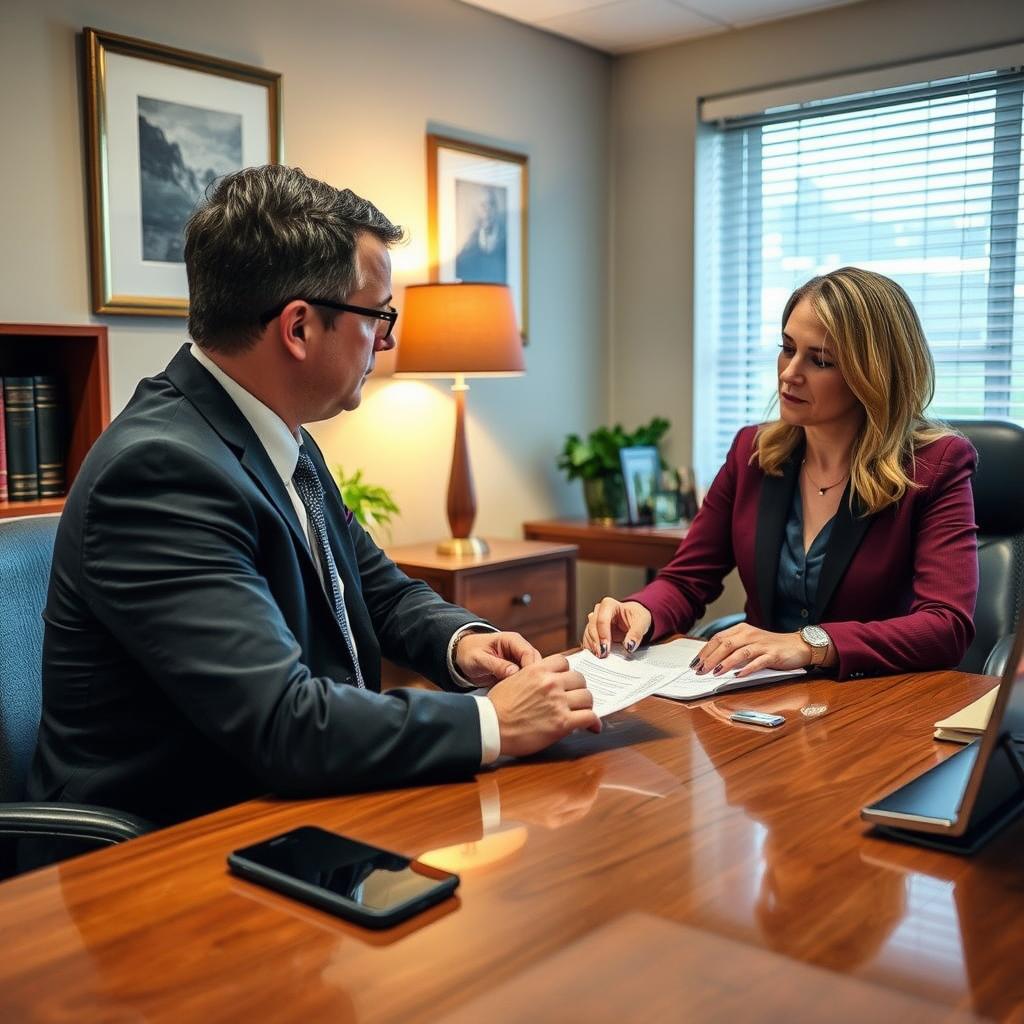
Service Member Divorce Lawyer Stafford County, VA
At the Stafford County Circuit Court, located at 1300 Courthouse Road, Stafford, VA 22554, divorce petitions involving service members are heard alongside the complex issues of military pension division, custody, and the Servicemembers Civil Relief Act (SCRA). Stafford County sits between Northern Virginia and Fredericksburg, with Quantico Marine Corps Base just minutes away via I‑95. Law Offices Of SRIS, P.C. represents service members and military spouses throughout Stafford County, bringing extensive familiarity with the local courts and the unique legal considerations that arise when one or both parties are in the armed forces. For a consultation, call (888) 437‑7747. Law Offices Of SRIS, P.C. – Advocacy Without Borders.
Stafford County Courts for Service Member Divorce
The divorce process in Stafford County typically involves two separate courts. The Stafford County Circuit Court has exclusive jurisdiction over divorce, equitable distribution, and spousal support. The Stafford County Juvenile & Domestic Relations District Court handles standalone matters of custody, visitation, child support, and protective orders when those issues arise outside of a pending divorce. Both courts are located at 1300 Courthouse Road. The Circuit Court can be reached at (540) 658‑8904, and the J&DR Court at the same number. Our Fairfax Location serves clients at these Stafford County courts, and we schedule appointments by phone at (888) 437‑7747.
Local Process Steps for a Service Member Divorce in Stafford County
A service member divorce begins by filing a complaint in the Stafford County Circuit Court. Virginia requires that at least one party has been a bona fide resident and domiciliary of the Commonwealth for six months before filing (Va. Code § 20‑97). The grounds for divorce are set out in Va. Code § 20‑91 and include fault‑based grounds such as adultery, cruelty, desertion, or felony conviction with imprisonment of more than one year, as well as no‑fault separation: one year of living separately, or six months if there are no minor children and the parties have a signed separation agreement.
Service members enjoy certain protections under the SCRA, including a potential stay of proceedings (at the court’s discretion) if the party’s military service materially affects their ability to appear or participate. The timeline for a divorce varies: an uncontested divorce with a comprehensive separation agreement can often be finalized within a few months of meeting the separation period and filing, while a contested case involving custody, support, or military pension division may require considerably more time, depending on the court’s calendar and the complexity of the marital estate. A property settlement agreement, signed by both spouses, can resolve all outstanding issues and help avoid a trial. Mediation is not mandatory in Virginia but is frequently used.
What the Court Considers in a Service Member Divorce
Virginia is an equitable distribution state. The Circuit Court divides marital property in a manner it considers fair, not necessarily 50/50, after evaluating the 11 factors listed in Va. Code § 20‑107.3. Military retired pay is treated as marital property, and the portion earned during the marriage is subject to division. The court may direct payment of a percentage of the marital share of a military pension or Thrift Savings Plan through a Qualified Domestic Relations Order (QDRO). Mr. Sris testified before the Virginia House Courts of Justice Committee in support of 2019 HB 635 (chief patron Del. David Bulova), which addressed procedural aspects of pension division under subsection (g). When children are involved, custody and visitation are decided under the trusted‑interests standard of Va. Code § 20‑124.3. The court considers the child’s relationship with each parent, the ability of each parent to support the child, and any history of family abuse, among other factors. Deployment and relocation are treated as factual circumstances that the court weighs.
Attorney Credentials
Mr. Sris, Owner and Founder of Law Offices Of SRIS, P.C., has practiced law since 1997. He is a former prosecutor and is admitted in Virginia, Maryland, the District of Columbia, New Jersey, and New York. Together with his Of Counsel team, Mr. Sris brings over 120 years of combined legal experience to family law matters, including military divorces, supported by 4,739+ documented firm-wide results. Results may vary. The firm’s Fairfax Location represents service members and their spouses throughout Stafford County and the surrounding region.
Frequently Asked Questions
How does a service member divorce differ from a civilian divorce in Virginia?
A service member divorce involves additional federal protections under the Servicemembers Civil Relief Act (SCRA) and the special treatment of military retired pay under Virginia’s equitable distribution statute. The SCRA can stay proceedings if a service member’s duty materially impairs their ability to respond. Military retired pay is divisible as marital property, and the portion earned during the marriage may be distributed by the court. Federal law also sets rules for jurisdiction, residency, and the calculation of support that differ from civilian proceedings. An experienced attorney can navigate these overlapping state and federal requirements.
What protections does the Servicemembers Civil Relief Act provide in a Stafford County divorce?
The SCRA allows a service member to request a temporary stay (delay) of divorce proceedings if their military duties prevent them from participating in the case. The court has discretion to grant an initial stay of at least 90 days, with the possibility of additional stays. The SCRA also imposes special rules for default judgments, ensuring that a service member who fails to respond while on active duty is not unfairly deprived of property or custody rights without adequate safeguards. These protections apply in Stafford County Circuit Court as they do throughout Virginia.
How is a military pension divided in a Virginia divorce?
Virginia courts treat military retired pay as marital property subject to equitable distribution, meaning the portion earned during the marriage may be divided between the spouses. The court can award a percentage of the marital share directly to the former spouse through a Qualified Domestic Relations Order (QDRO) or a similar military qualifying court order under the Uniformed Services Former Spouses’ Protection Act. Va. Code § 20‑107.3 governs the classification and division of such retirement accounts. The exact division depends on the length of the marriage overlapping the service member’s career and the court’s assessment of the statutory factors.
Can a service member file for divorce in Stafford County while deployed?
Yes, a service member can file for divorce in Stafford County while deployed, provided Virginia’s residency requirements are met and the complaint is properly served on the other party. Deployment may affect the timeline, as the SCRA can stay proceedings if the service member shows that military service materially limits their ability to participate. However, the initial filing can often proceed, and an experienced local attorney can help coordinate service of process and manage the case during deployment. The Stafford County Circuit Court is accustomed to accommodating the scheduling needs of deployed personnel.
How long does a service member divorce take in Stafford County?
The duration of a service member divorce in Stafford County depends on whether it is contested and on the required separation period under Virginia law. An uncontested divorce—where the parties have a signed separation agreement and have satisfied the six‑month or one‑year separation period—may be resolved within a few months after filing. Contested divorces involving custody, support, or division of a military pension can take longer, sometimes extending beyond a year. The SCRA may also introduce delays if a stay is granted. The court’s calendar and the complexity of the marital estate are significant factors.
What if my spouse is in the military and we have children?
Child custody and support issues in a military divorce are governed by the trusted‑interests standard under Va. Code § 20‑124.3, the same as in any other custody proceeding, but deployment and relocation can create unique challenges. The Stafford County Juvenile and Domestic Relations District Court or the Circuit Court (if part of the divorce) will evaluate the child’s relationship with each parent, the ability of each parent to care for the child, and any history of abuse. A parenting plan can address deployment schedules, communication, and custody arrangements. Child support is calculated under the Virginia guidelines based on combined gross income, which may include military allowances and benefits.
Do I need a lawyer for a service member divorce in Stafford County?
You are not legally required to have a lawyer, but service member divorces involve complex state and federal laws that are difficult to navigate without experienced counsel. Issues such as military pension division, the SCRA, interstate jurisdiction, and the calculation of support based on military pay make these cases far more intricate than a typical civilian divorce. An attorney familiar with Stafford County courts and Virginia family law can help protect your rights and work toward a favorable resolution. For guidance, reach Law Offices Of SRIS, P.C. at (888) 437‑7747.
How does the Stafford County Circuit Court handle military divorce cases?
The Stafford County Circuit Court applies the same Virginia divorce and equitable distribution statutes to military couples as it does to civilian couples, while also enforcing the SCRA when applicable. The court’s judges are experienced with cases involving service members from Quantico Marine Corps Base and other installations. Procedurally, the court may accommodate deployment‑related scheduling conflicts and will require compliance with Virginia’s corroborating‑witness requirement for an uncontested divorce. The court may also handle requests for pendente lite relief (temporary support and custody) while the divorce is pending.
What are the residency requirements for divorce when one spouse is stationed in Virginia?
At least one party must be an actual bona fide resident and domiciliary of Virginia for six months before filing (Va. Code § 20‑97). A service member stationed in Virginia under permanent change of station orders can establish domicile if they intend to make Virginia their permanent home. The spouse’s domicile does not automatically follow the service member’s domicile; each party’s residency is evaluated individually. If neither spouse meets the six‑month domicile requirement, the divorce cannot proceed in Virginia state court; alternative venues may need to be explored.
How does deployment affect child custody in Stafford County?
Deployment is not a ground to deny custody, but Virginia courts will consider it as a factual circumstance when determining the best interests of the child. The court may enter a temporary custody order for the duration of the deployment and provide for a structured parenting schedule upon return. A comprehensive parenting plan, agreed to by both parents, can address deployment, communication, and decision‑making while the service member is away. The Stafford County J&DR Court or Circuit Court can modify custody orders when a substantial change in circumstances occurs, such as a deployment.
For a comprehensive statutory breakdown of Virginia divorce grounds, see the firm’s Virginia family law resource page. For a broader discussion of service member divorce strategies, review the military divorce overview on the main site.
Contact Law Offices Of SRIS, P.C. at (888) 437‑7747 to request a consultation. The Fairfax Location is at 4008 Williamsburg Court, Fairfax, VA 22032; local direct line: (703) 636‑5417. By appointment only. Serving military families in Stafford, Aquia Harbour, Brooke, and the surrounding communities.
Attorney advertising. Prior results do not guarantee a similar outcome. Case results depend on a variety of factors unique to each case. Results may vary. Attorney responsible for this advertising: Mr. Sris.