
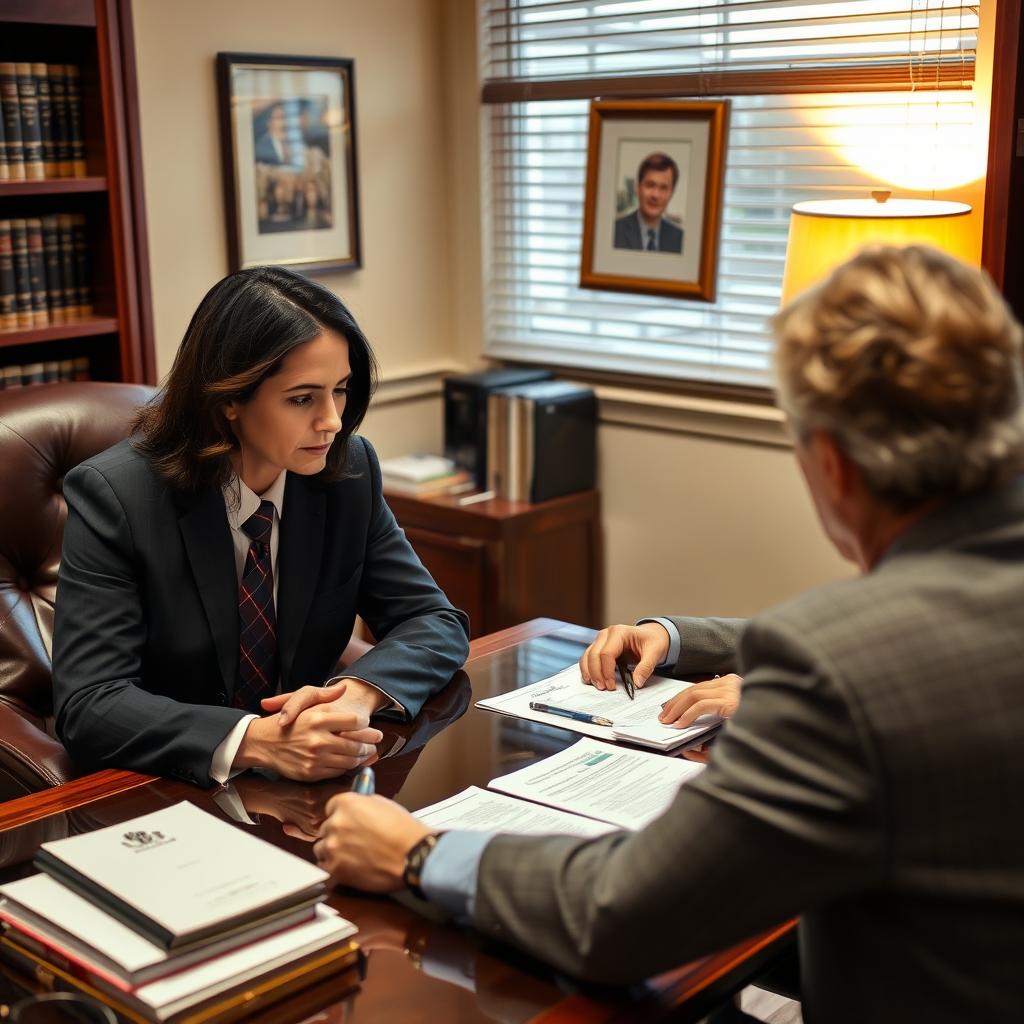
Trafficking in Counterfeit Goods lawyer Stafford County, VA
Imagine federal agents from the FBI or Homeland Security Investigations knock on your door in Stafford County, serving a warrant for trafficking in counterfeit goods. A number of successful business owners and entrepreneurs across Aquia Harbour, Brooke, and the greater Stafford area have been caught off guard by federal counterfeit goods investigations. These cases are prosecuted by the U.S. Attorney’s Office for the Eastern District of Virginia, often after months of undercover work. The stakes are high: federal sentencing guidelines apply, there is no parole in the federal system, and conviction rates regularly exceed 90%. If you are facing such an investigation, you need a defense that understands both the local federal court landscape and the complexities of trademark and import law. Mr. Sris, a former prosecutor, and the firm’s Of Counsel attorneys represent clients in the U.S. District Court for the Eastern District of Virginia. To discuss your situation, call (888) 437-7747. Law Offices Of SRIS, P.C. – Advocacy Without Borders.
A Strategy for Your Federal Counterfeit Goods Case in Stafford County
Federal counterfeit goods charges arise under 18 U.S.C. § 2320 when the government contends you intentionally trafficked in goods or services using a counterfeit mark. Investigations typically involve a federal agency—such as the FBI, U.S. Immigration and Customs Enforcement, or the U.S. Postal Inspection Service—executing search warrants at homes, storage units, or businesses in Stafford County. Our goal from the first contact is to protect you from self-incrimination, secure your pretrial release, and begin an early, active investigation of the government’s case. We scrutinize every step: whether the search warrant was valid, whether the alleged “counterfeit” mark is in fact registered and used in commerce, and whether the evidence supports a willful intent to deceive. Because the Eastern District of Virginia’s “rocket docket” moves quickly, prompt action matters. Mr. Sris and the firm’s Of Counsel attorneys are experienced in federal criminal defense and work to identify the most promising strategy early—challenging the indictment, negotiating for a deferred prosecution, or preparing a vigorous trial defense.
What to Expect in the Eastern District of Virginia
If charges are filed, your case will proceed in the U.S. District Court for the Eastern District of Virginia, which has a courthouse in Alexandria and divisional offices in Richmond, Norfolk, and Newport News. Most Stafford County federal cases are heard in Alexandria. You will have an initial appearance before a U.S. Magistrate Judge, where bond conditions will be set. The grand jury process returns an indictment, and the case then moves to arraignment and pretrial motions. Federal discovery can be voluminous—thousands of pages of financial records, undercover communications, and expert reports on trademark analysis. The Speedy Trial Act generally requires trial within 70 days of indictment, but numerous exceptions and continuances mean a complex counterfeit goods case can last a year or more. The federal system does not have parole, so every decision from pretrial release through sentencing carries serious weight. Having counsel familiar with the Alexandria federal courthouse, its judges, and its pretrial services procedures is critical.
The Real Consequences of a Federal Counterfeit Goods Conviction
Trafficking in counterfeit goods is a felony. The statutory penalties include imprisonment, substantial fines, and forfeiture of any property used to commit or facilitate the offense. Sentencing is guided by the U.S. Sentencing Guidelines, which calculate a range based on the retail value of the genuine goods, the number of items, and the defendant’s role. A conviction can also have severe collateral consequences: asset forfeiture, damage to professional licenses, loss of import/export privileges, and irreparable harm to your business reputation. Because the federal system abolished parole, inmates serve the majority of their sentence. Mr. Sris and the firm’s Of Counsel attorneys understand how the Guidelines apply in counterfeit goods cases and work to minimize the offense level through challenges to the loss amount, acceptance-of-responsibility credits, and arguments for a variance or downward departure. Results may vary.
Experienced Federal Defense Representation
Law Offices Of SRIS, P.C., founded in 1997, concentrates its practice on criminal defense in state and federal courts across Virginia, Maryland, the District of Columbia, New Jersey, and New York. Mr. Sris, a former prosecutor, brings a firsthand understanding of how federal investigations are built. He works closely with the firm’s Of Counsel attorneys, drawing on extensive combined legal experience, to handle complex federal criminal matters. The firm appears regularly in the U.S. District Court for the Eastern District of Virginia on behalf of clients from Stafford County and throughout Northern Virginia. For a full statutory breakdown of the federal Trafficking in Counterfeit Goods statute, see our comprehensive analysis at srislawyer.com.
Frequently Asked Questions
What is trafficking in counterfeit goods?
Trafficking in counterfeit goods is the federal crime of intentionally dealing in merchandise or services bearing a fake trademark. Under 18 U.S.C. § 2320, the government must prove the accused knowingly used a counterfeit mark—identical to, or substantially indistinguishable from, a registered mark—on or in connection with the goods. Simple possession of a counterfeit item, without evidence of commercial dealing, usually does not qualify.
I received a target letter from a federal agency. What should I do?
Do not speak with federal agents and contact an experienced federal criminal defense lawyer immediately. A target letter means you are a subject of a federal investigation. Even casual conversation can be used against you. The firm can then contact the prosecutor on your behalf while you preserve all relevant documents and inventory records. Early intervention can sometimes avert an indictment.
How does an attorney defend a Stafford County federal counterfeit goods case?
Defense strategies often begin with challenging the search warrant or the authenticity of the underlying trademark registration. We examine whether the alleged mark is validly registered and used in U.S. Commerce, whether the defendant had knowledge the mark was counterfeit, and whether the quantity and value of goods supports the charges. Pretrial motions to suppress evidence and negotiations with the Assistant U.S. Attorney are central. In appropriate cases, we pursue a deferred prosecution agreement or a plea to a lesser offense.
Will I be facing jail time?
A conviction for trafficking in counterfeit goods can result in imprisonment. The length depends on the retail value of the genuine articles, the number of infringing items, and your role in the offense. Federal sentencing guidelines often call for a term of months or years. However, the final sentence is determined by the judge after considering the guidelines, the nature of the offense, and your personal history.
What is the difference between a felony and a misdemeanor in the federal system?
Trafficking in counterfeit goods is a felony offense. Felonies carry a potential sentence of more than one year. A felony conviction also triggers a number of collateral consequences, such as loss of the right to vote (while incarcerated), restrictions on firearm possession, and significant challenges with employment and professional licensing.
Can the charges be reduced or dismissed?
Yes, federal counterfeit goods charges can sometimes be reduced or dismissed. If the evidence was obtained through a defective search, if the trademark registration is vulnerable, or if the defendant can demonstrate a lack of intent or knowledge, the prosecution may agree to dismiss counts or reduce the charge to a misdemeanor. We thoroughly analyze the case for every possible legal and factual defense.
Do I need a lawyer for a federal investigation in Stafford County?
Yes, you need a lawyer as soon as you suspect you are under federal investigation. The U.S. Attorney’s Office for the Eastern District of Virginia has significant resources and a high conviction rate. An experienced defense attorney can intervene at the investigative stage, protect your rights, and help you avoid self-incrimination. To discuss your matter, reach Law Offices Of SRIS, P.C. at (888) 437-7747.
How do I choose a federal criminal lawyer in Stafford County?
Look for an attorney with experience in the Eastern District of Virginia who regularly handles federal felony cases. Mr. Sris is a former prosecutor and has practiced in Virginia federal courts since 1997. The firm’s Of Counsel attorneys bring additional litigation experience. You should feel comfortable with the lawyer’s approach and confident they will be accessible. For a consultation, call (888) 437-7747.
Learn more about federal criminal defense in neighboring counties:
- Fairfax County Federal Criminal Lawyer
- Prince William County Federal Criminal Lawyer
- Fauquier County Federal Criminal Lawyer
- Loudoun County Federal Criminal Lawyer
- Arlington County Federal Criminal Lawyer
Official primary sources:
- U.S. District Court for the Eastern District of Virginia
- 18 U.S. Code (Cornell Legal Information Institute)
- U.S. Sentencing Guidelines (U.S. Sentencing Commission)
Law Offices Of SRIS, P.C., founded in 1997, serves clients from its Fairfax location. By appointment only. 4008 Williamsburg Court, Fairfax, VA 22032. Call (888) 437-7747 to request a consultation.
Attorney advertising. Prior results do not guarantee a similar outcome.
Results may vary.
Case results depend on a variety of factors unique to each case.